



B2B eCommerce Platform by Virto


Enterprise-Ready, AI-Mature B2B eCommerce Platform
Granular Risk-Free Replatforming
Your first version can be live in three weeks, composed from 100+ pre-built modules rather than built from scratch. Add new capabilities one at a time, without pausing sales.
Built for B2B Complexity
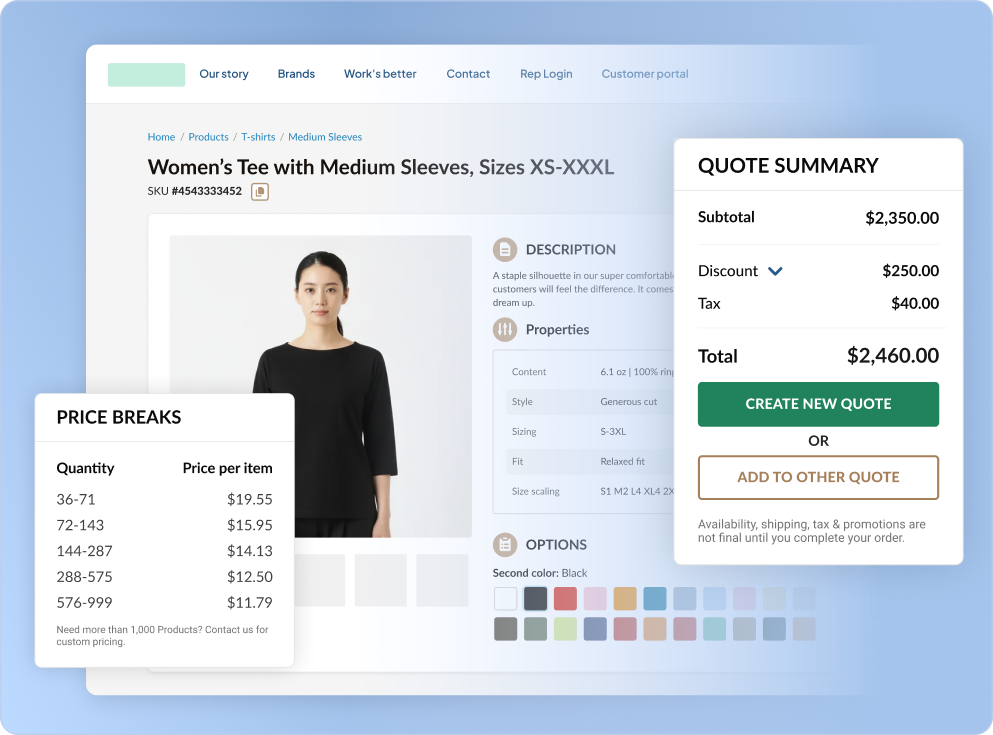
Natively supports contracts, quotes, tiered pricing, and advanced B2B workflows.
Built for Change
Any part of the commerce engine can be added or replaced without disrupting what already runs.
Virto's Commerce Innovation Platform for B2B scenarios
AI-Driven B2B Platform
AI maturity recognized by Gartner analysts
in the 2025 Magic Quadrant for Digital Commerce.
Predictable Total
Cost of Ownership
Cost of Ownership
Source-available on GitHub, modular, and cloud-native foundation reduce upfront development and long-term maintenance costs.
Recognized Platform Excellence
Virto's B2B ecommerce platform is recognized by leading independent research agencies such as Gartner, Forrester, McFadyen Digital, IDC, and more.

Which B2B Scenarios Can You Run on One Platform?
-
Learn More →
Manage configurable products, BOMs, and contract pricing with a B2B ecommerce platform for manufacturers that connects ERP and PLM while enabling direct sales across regions.
-
Learn More →
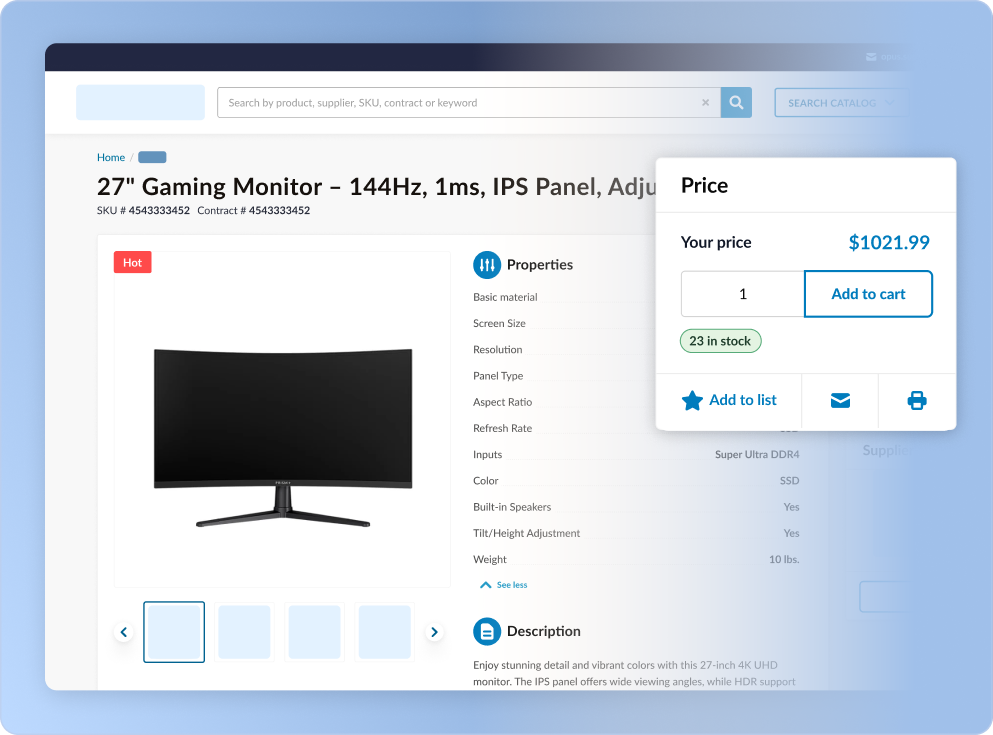
Manage contract-based catalogs, customer-specific pricing, and real-time inventory with a B2B ecommerce platform for distributors operating across warehouses and regions.
-
Learn More →
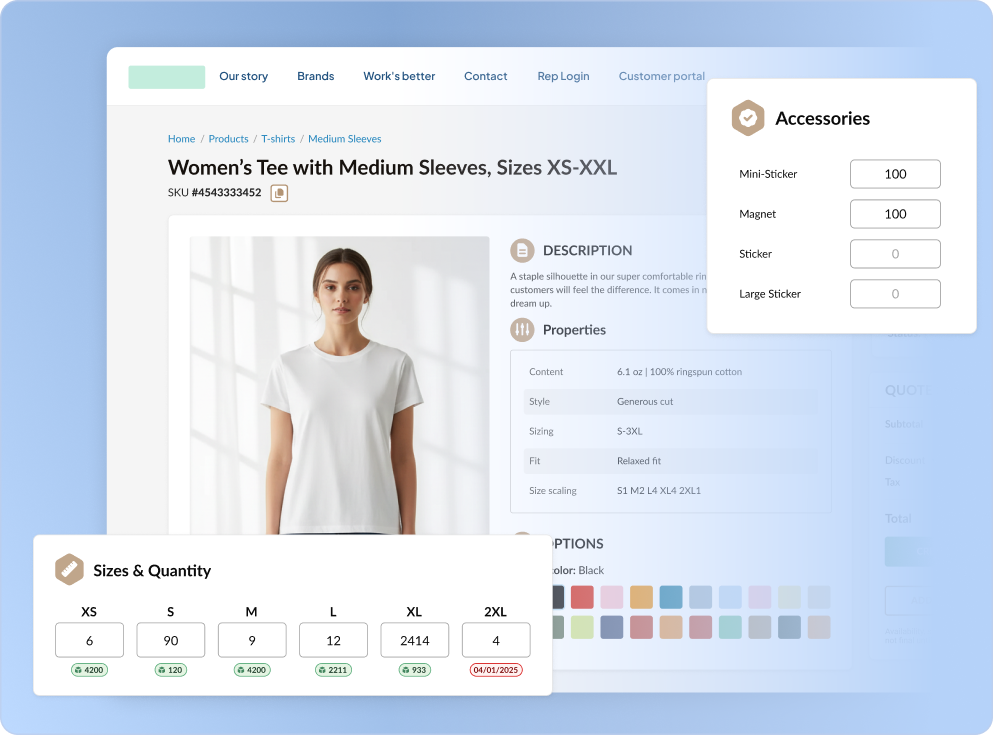
Handle millions of SKUs, tiered pricing, bulk ordering, and buyer self-service using an enterprise B2B ecommerce platform for wholesalers designed for complexity.
-
Learn More →
Launch multi-vendor marketplaces with seller onboarding, split carts, commissions, and isolated pricing, all powered by one composable commerce platform.
-
Learn More →
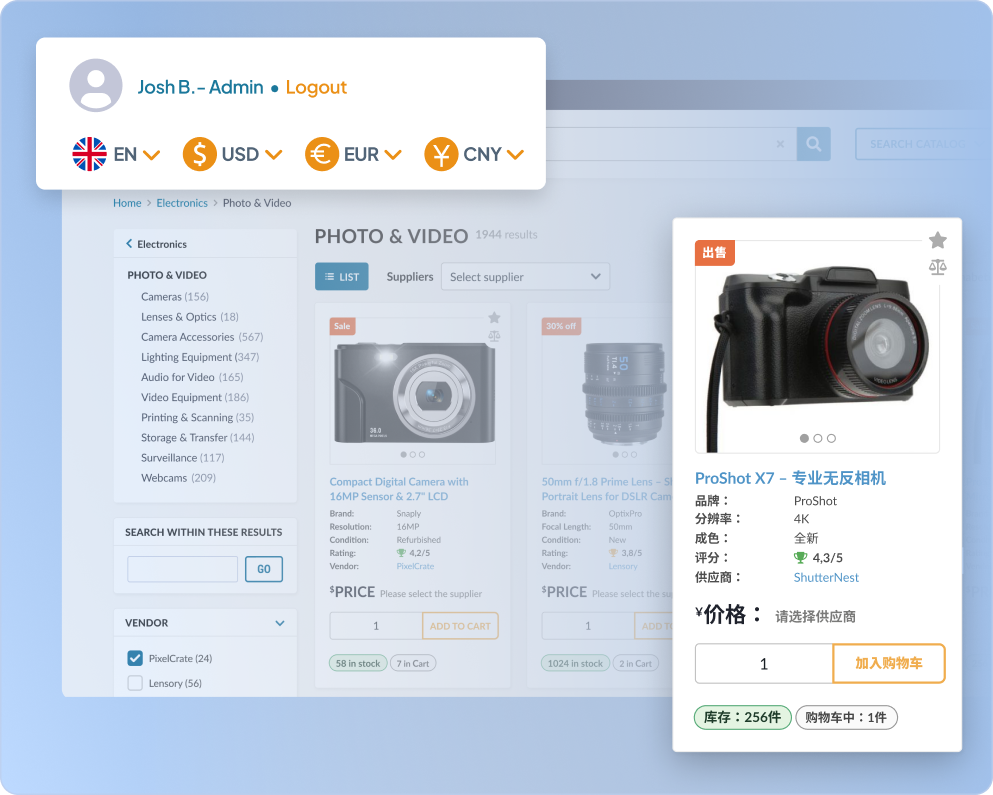
Run global B2B ecommerce across the US, EU, and China with region-specific deployments, local compliance, and shared core services on one platform.
-
Learn More →
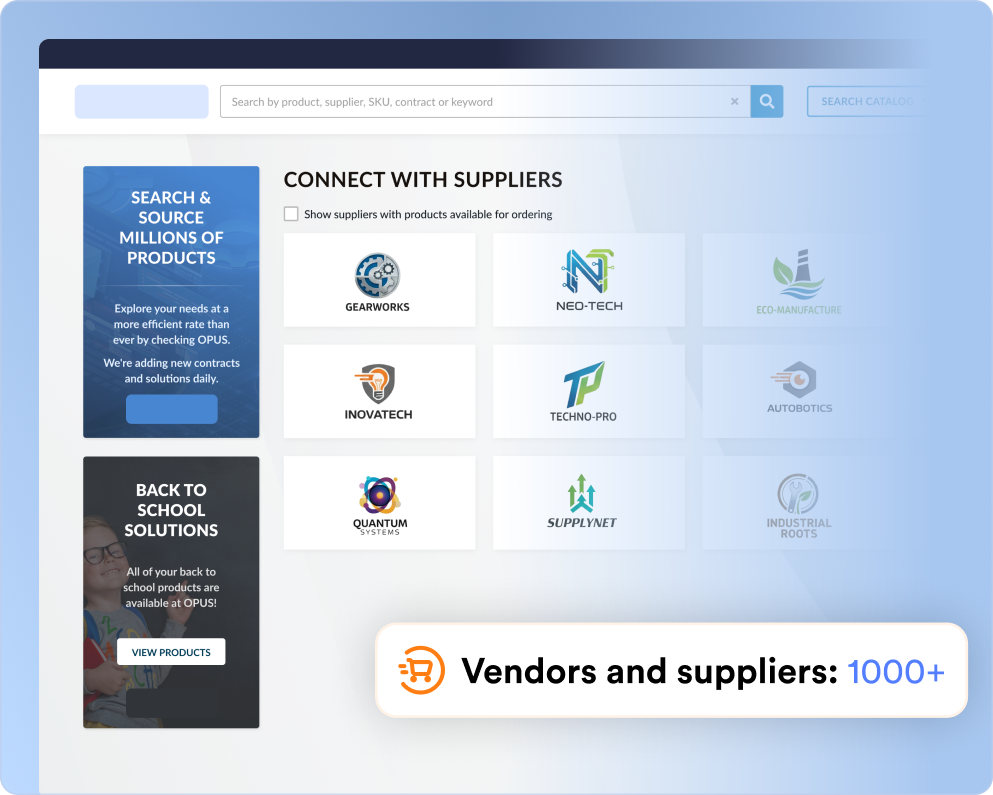
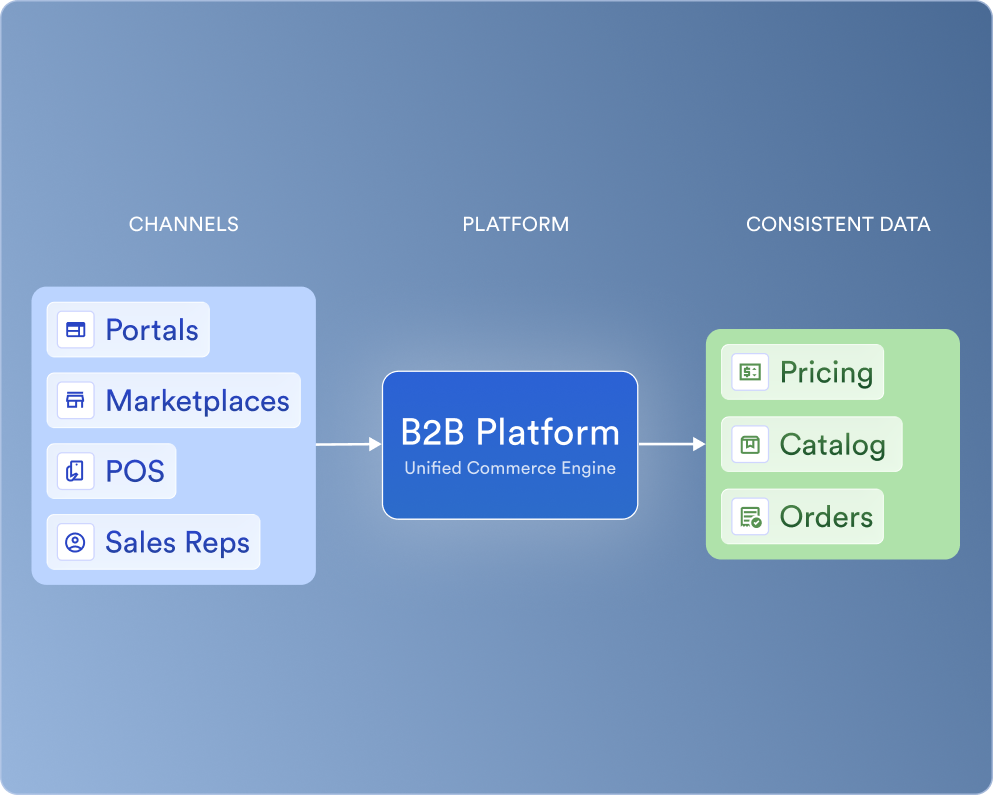
Unify portals, marketplaces, APIs, and sales reps with a B2B ecommerce platform that keeps pricing, catalog, and orders consistent across channels.
Tailored Capabilities for B2B eCommerce
Order Management (OMS)
Built-in OMS to manage complex B2B order flows, from split shipments to approvals and status tracking, all in one place.
Catalog & Product Management (PIM)
Built-in PIM to manage large product catalogs, multi-level structures, and custom attributes, with no third-party tools required.
B2B Portal Solution
B2B portal features for reordering, tracking, invoicing, and account management to accelerate sales cycles.
See All B2B Features
Content Management (CMS)
Built-in basic CMS to craft landing pages, blogs, banners, and manage transactional content, while easily integrating with external CMS platforms.
Marketplace & Vendor Management
Features for effective management of multiple suppliers, catalogs, approvals, and pricing rules in one place.
Virto's B2B eCommerce Platform: Tech Properties
Your proven foundation for development, deployment, and effective platform management.
Microsoft-Based .NET Core
Built on .NET 10 Core, C#, and ASP.NET with a source-available code on GitHub, Virto offers enterprise-grade performance.
Virto Atomic Architecture™
Virto Atomic Architecture™ decomposes commerce into atomic units: 100+ pre-built, independently deployable modules, so the capability is already there rather than built from scratch.
Cloud-Native
Extensible, cloud-native & cloud-agnostic infrastructure built on Kubernetes provides hosting & DevOps tools.
API-First and Headless
Virto integrates with the systems you already run, from ERP to CRM to PIM. Design the experience you want, and plug into your existing stack.
Architectural Excellence of Virto's Innovation Platform
How Enterprises Achieve B2B Success with Virto

HEINEKEN modernizes its Digital Order Transfer & cuts platform upgrade time by 50%

North America's largest GPO marketplace empowers 14K+ public agencies to procure faster, reaching 94% of the U.S. population

Bosch's B2B loyalty portal services 150K+ users and 210K+ orders
Your Questions, Answered
Virto's Commerce Innovation Platform is a next-generation composable ecommerce platform that can be fully managed in the cloud via Virto Cloud. Designed as a flexible foundation for digital innovation, it features a modular architecture, open APIs, full customization from backend to frontend, and a tech-agnostic approach. With Virto's CIP, enterprises can build unique B2B and B2B2C models, marketplaces, and customer-facing solutions, integrate new technologies with ease, and quickly adapt to changing market demands.
Virto's Commerce Innovation Platform combines platform composability with deployment composability: you can mix and match Packaged Business Capabilities and deploy each component, including backend and frontend infrastructure, in the region and cloud that fits your scalability, performance, and compliance needs, so less has to be rebuilt as those needs change.
Virto Commerce vs BigCommerce B2B Edition
Virto is a better fit for: contract and approval workflows, deep ERP integration, business rules that match how you already sell, .NET teams, and full access to the platform source.
BigCommerce is a better fit for: fast SaaS deployment and a minimal technical team.
Virto Commerce vs Adobe Commerce (Magento)
Virto is a better fit for: parts you can change, scale, or replace one at a time, a storefront you can redesign without touching the commerce rules underneath, hosting that scales with trading peaks, .NET teams, and lower long-term TCO.
Adobe is a better fit for: PHP teams and a larger agency ecosystem.
Virto Commerce vs Shopify Plus
Virto is a better fit for: large catalogs, negotiated pricing across multiple entities, deep customization you control, adding a channel or a system without building a new back end, and multi-warehouse operations.
Shopify is a better fit for: B2C + simple B2B scenarios and fastest time-to-market.
Virto is a better fit for: B2B and B2B2C models, capabilities you switch on and replace one at a time, deep ERP and back-office integration, .NET teams, and predictable long-term TCO.
Salesforce is a better fit for: enterprises already fully embedded in the Salesforce ecosystem and prioritizing CRM-led commerce with managed SaaS.
Virto Commerce vs commercetools
Virto is a better fit for: built-in product information, content, order, and media management running wherever you need it, and B2B-first features such as contracts, quotes, and tiered pricing.
commercetools is a better fit for: pure API approach and smaller SKU counts.
Unlike other headless B2B platforms, Virto includes PIM, CMS and media natively. Unlike monolithic suites, it avoids heavy architecture and costly extensions. You get faster change, strong performance and a lower total cost of ownership.
Yes. Virto is cloud-agnostic, with full Kubernetes support and zero vendor lock-in, so you can run it in Virto Cloud, your own cloud, or on-premises.
Virto fits businesses that already run, or are growing into, complex sales operations: fast-growing catalogs, several customer segments on different pricing, deep ERP and back-office integrations, and multi-warehouse or multi-region operations. On the technical side, it works best when you have a .NET development team or a trusted implementation partner, need deep customization, want full control over where the platform runs, and treat access to the platform source as a strategic advantage.
If your requirements are simpler (e.g., small catalog, basic B2B or B2C use cases), lighter SaaS platforms may be a better starting point. Virto is built for businesses that need flexibility, control, and room to grow without platform constraints.
Virto supports RFQs, negotiated contracts, punch-out procurement and multi-warehouse order management, all without custom coding or bolt-on modules.
Not necessarily. Virto Commerce supports gradual adoption: replace whichever pieces of the platform you want, when you're ready.
Most implementations launch in weeks rather than months, since the platform ships as 100+ pre-built modules you configure and assemble rather than build from scratch. Timelines still depend on the complexity of your integrations and how much customization your business requires.
A single vendor SLA, the option to have Virto run the platform for you in the cloud, and one unified data model remove middleware, custom integrations, and expensive add-ons.