



B2B Commerce Platform for FMCG, Beverage, and Foodservice
Sell to distributors, retail, HoReCa, and direct buyers on one platform. Built for fast-moving catalogs and high reorder volumes.
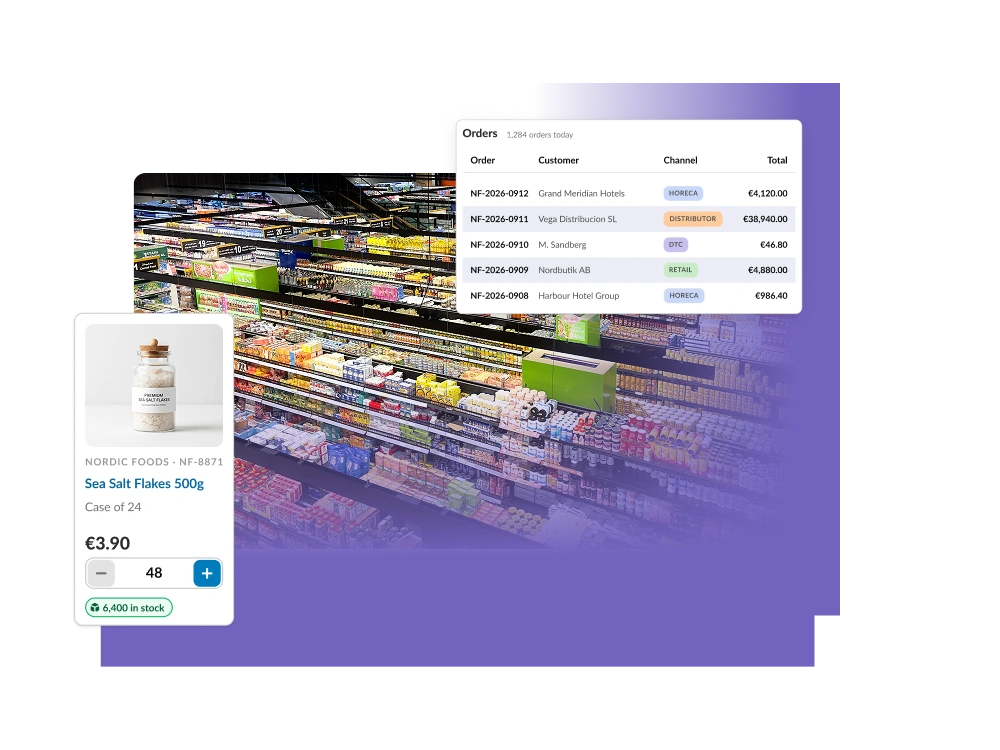


All FMCG Commerce Scenarios, on One Platform
-
Digitize routes to market, run sales-assisted and self-service ordering together, and gain visibility into the fragmented outlets distributors used to obscure.
-
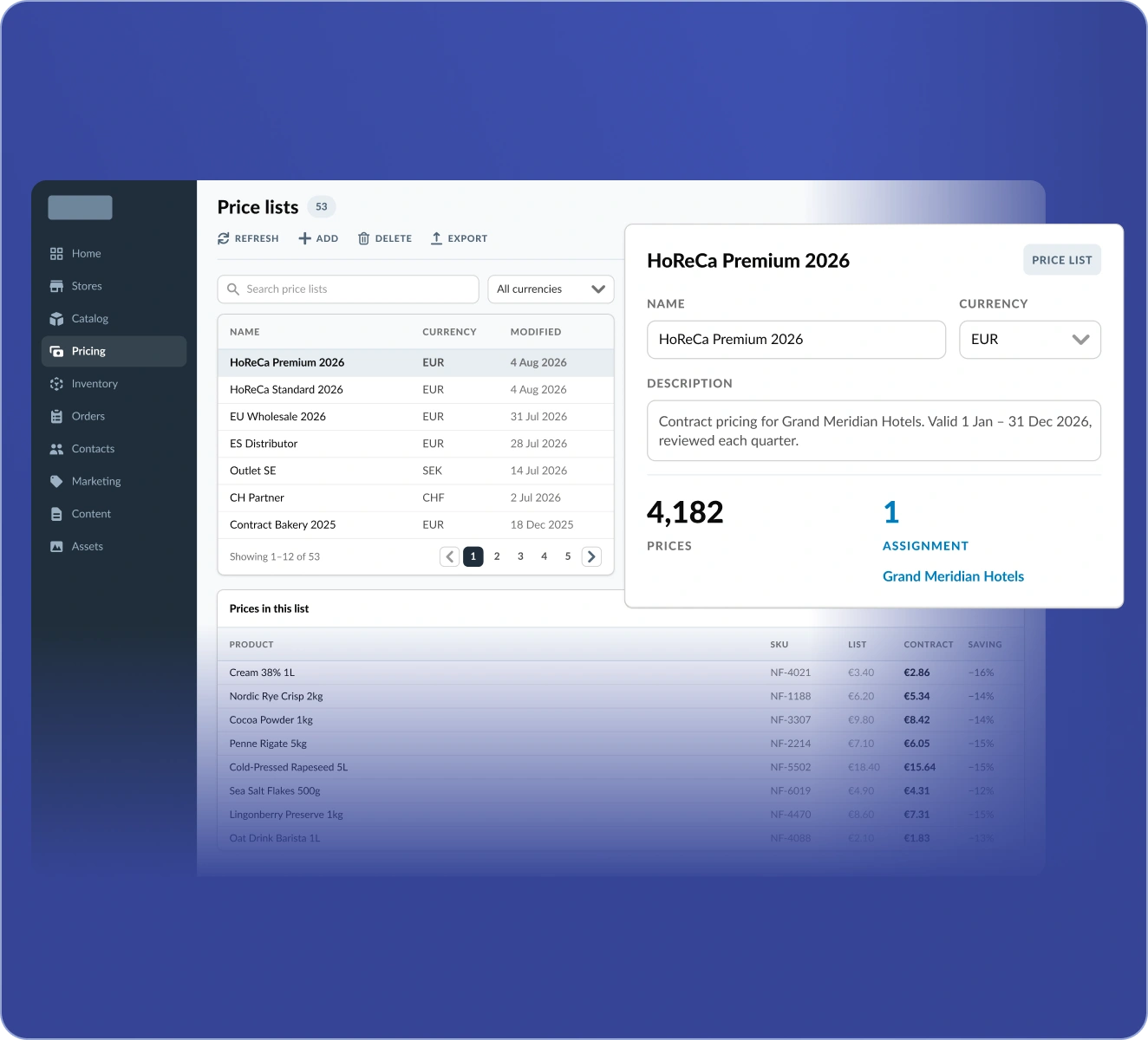
Give every account its own catalog and pricing, process high-frequency reorders reliably, and keep stock accurate with real-time ERP sync.
-
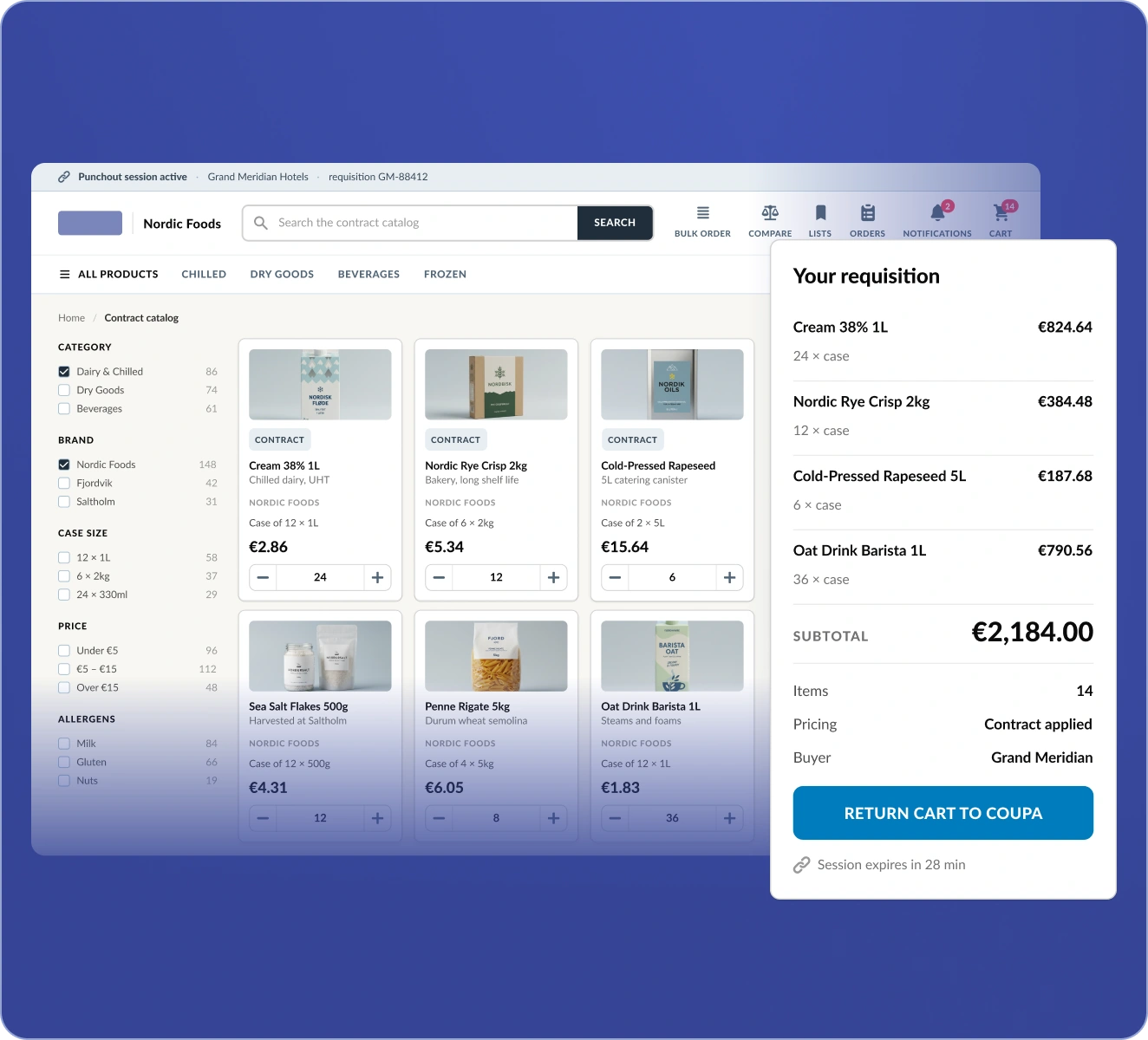
Serve retail and hospitality with contract catalogs, punchout, and bulk reorder, and let buyers self-serve to cut cost to serve at volume.
-
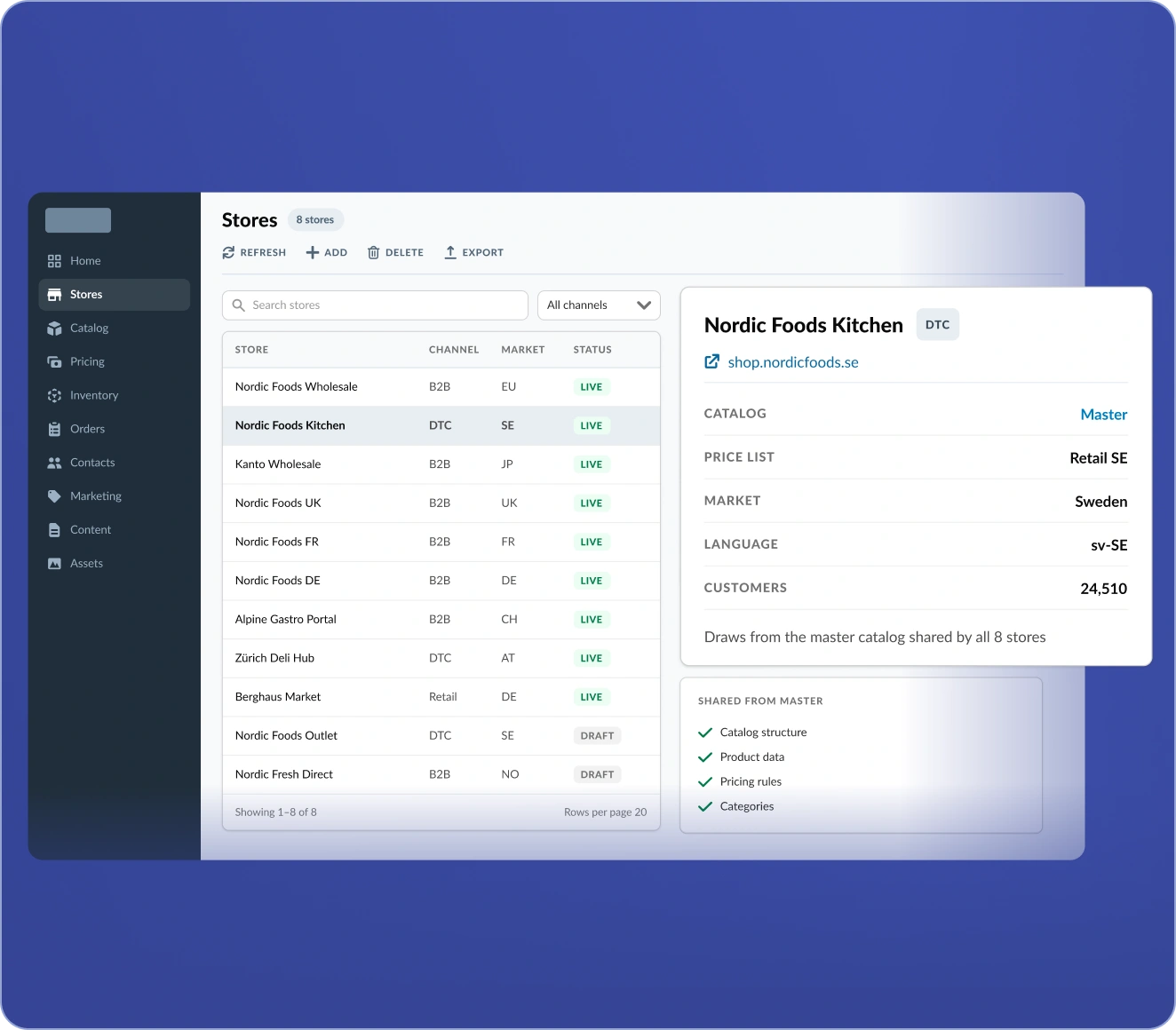
Add a B2C or DTC channel on the same core with B2B pricing kept intact, so a new customer model never means standing up asecond platform.
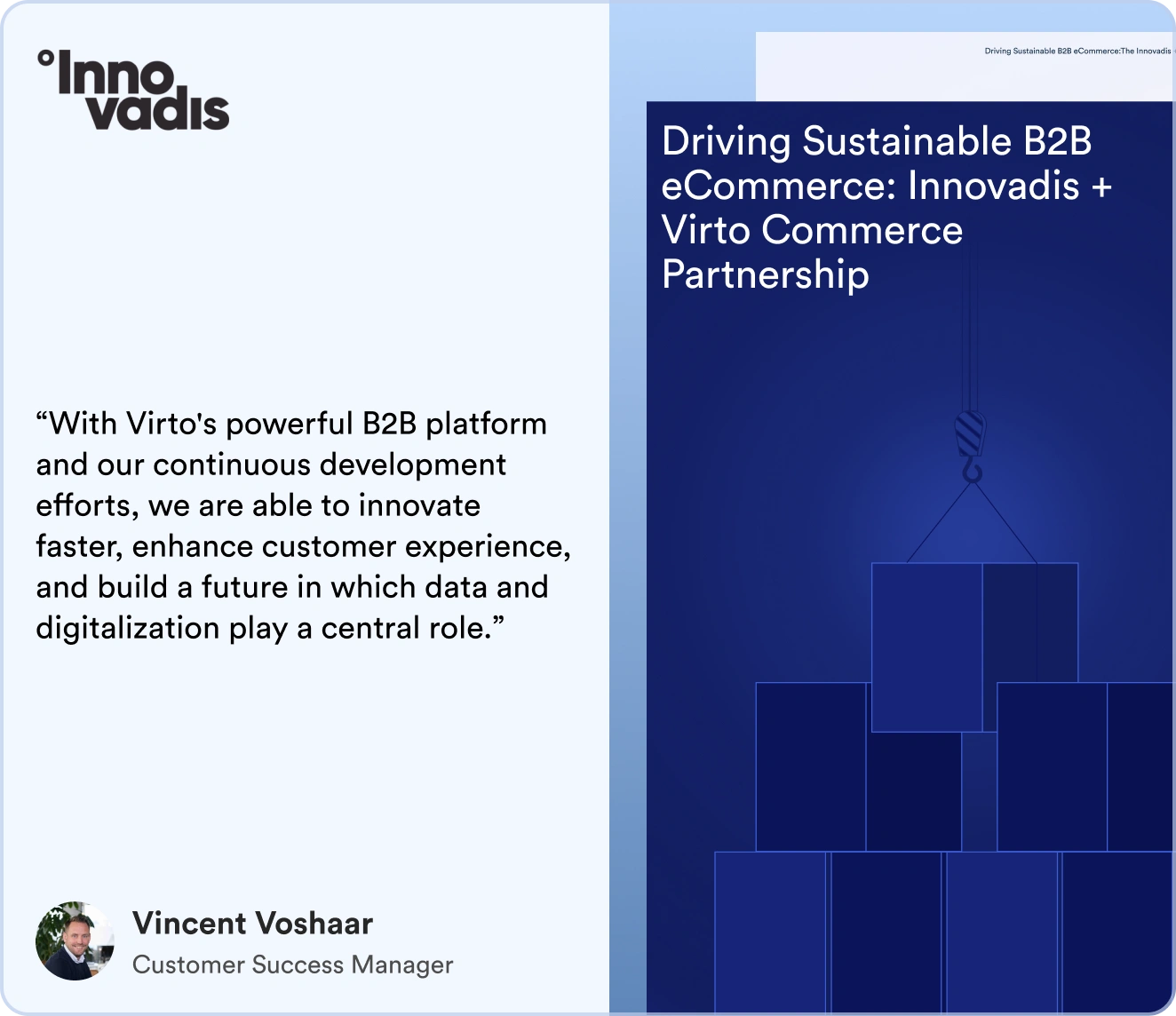
How Virto Commerce Solves FMCG eCommerce Challenges
One platform for every model, engineered for the speed, volume, and complexity of fast-moving consumer goods.
Real-Time
Inventory
Inventory
Keep stock, orders, and product data synced with your ERP and warehouse in real time, so buyers order only what is actually available and oversells disappear.
Complex Routes
to Market
to Market
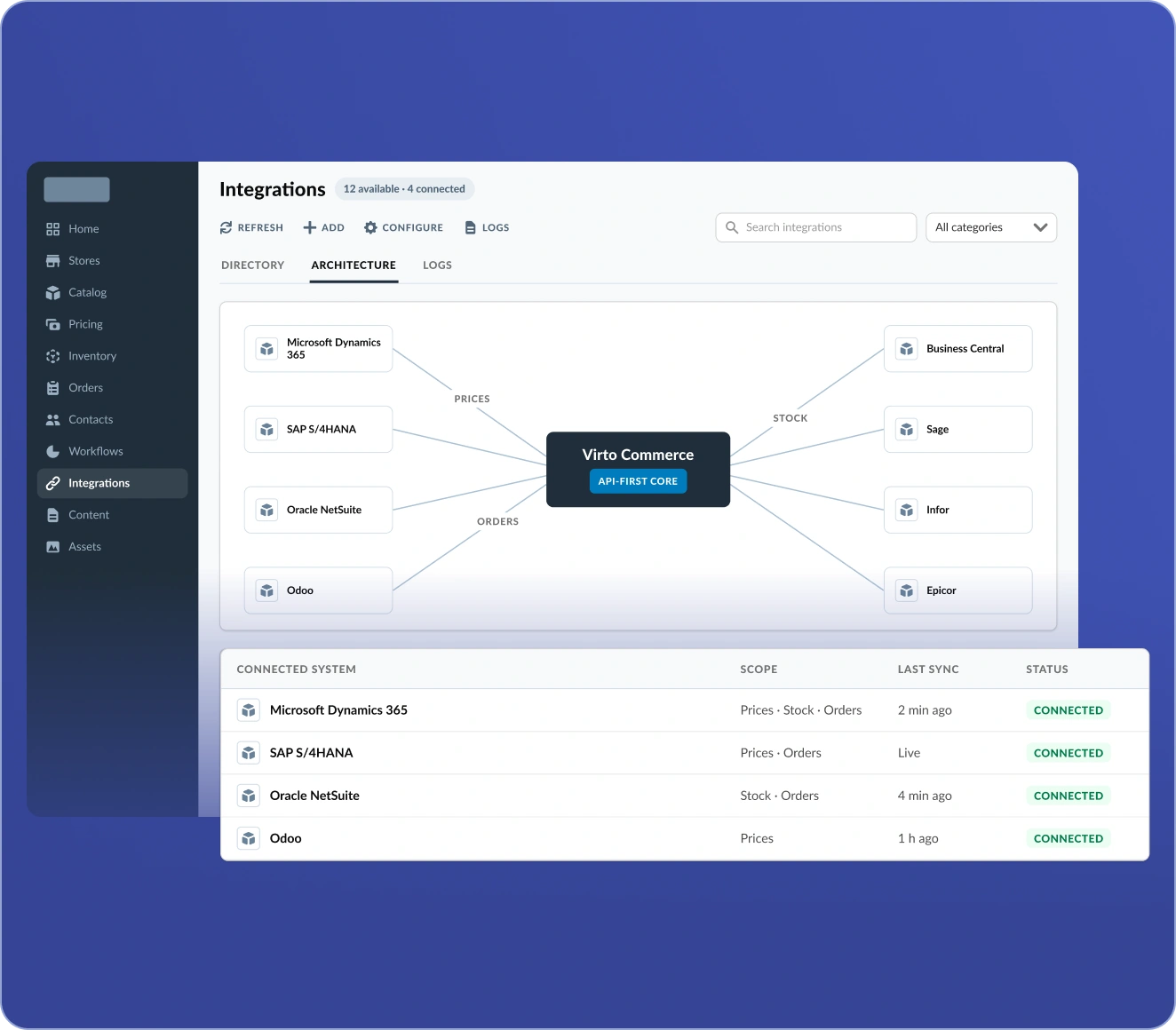
Connect transport, storage, distributors, and 3PLs directly to commerce through an API-first core, so orders, stock, and delivery stay coordinated as routes change.
Compliance
Meet tax, data-protection, and payment-security rules out-of-the-box, with audit logs and role-based access, so entering a new market never means a compliance rebuild.
Start the Interactive Platform Demo
No Visibility Behind Distributors
Selling through distributors hides the outlets buying your products. Bring fragmented retail and HoReCa demand into one view you can see and act on directly.
Manual Account Pricing
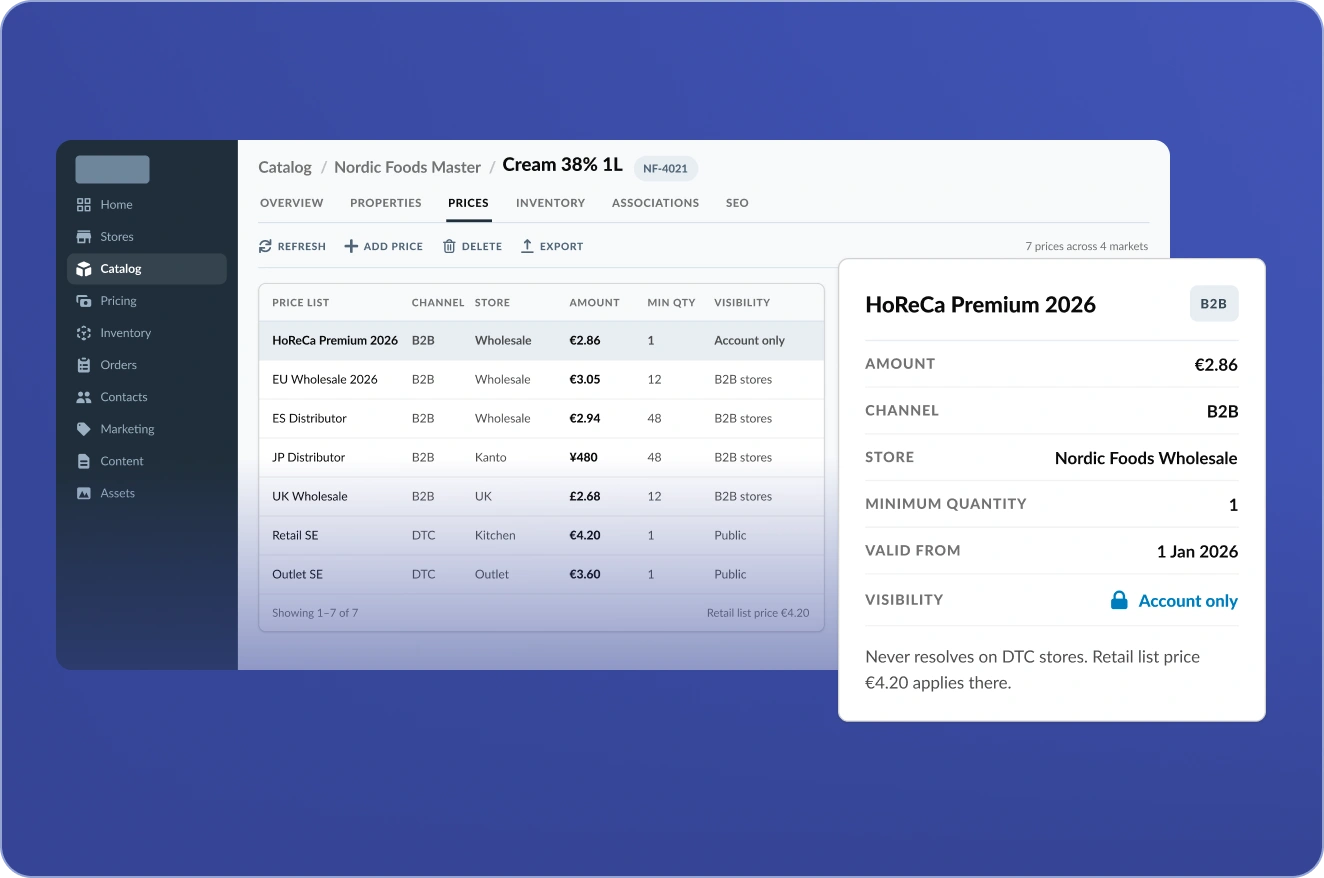
Move thousands of account-specific prices and terms out of spreadsheets and model them natively, so the right price and assortment apply automatically at login.
Works with the Systems You Already Run
250+
integrations across 25 operating companies
5
5
Tailored Capabilities for FMCG eCommerce
Your ERP, CRM, PIM, and distributor systems stay the systems of record. Virto Commerce is the layer that keeps them in sync in real time.
-
Learn More →
Give every account its own prices, terms, and assortment, and retire the manual spreadsheet work.
-
Learn More →
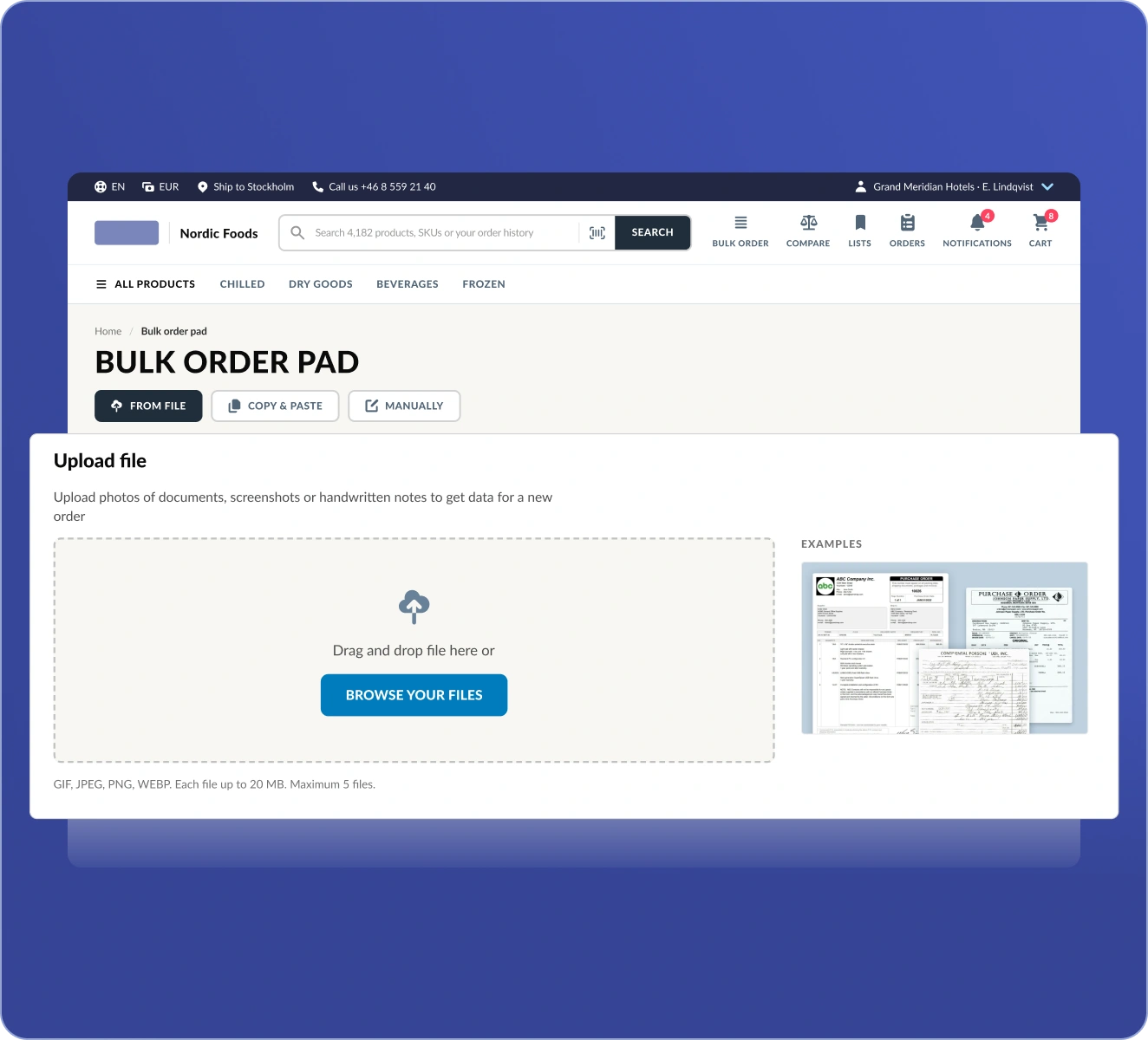
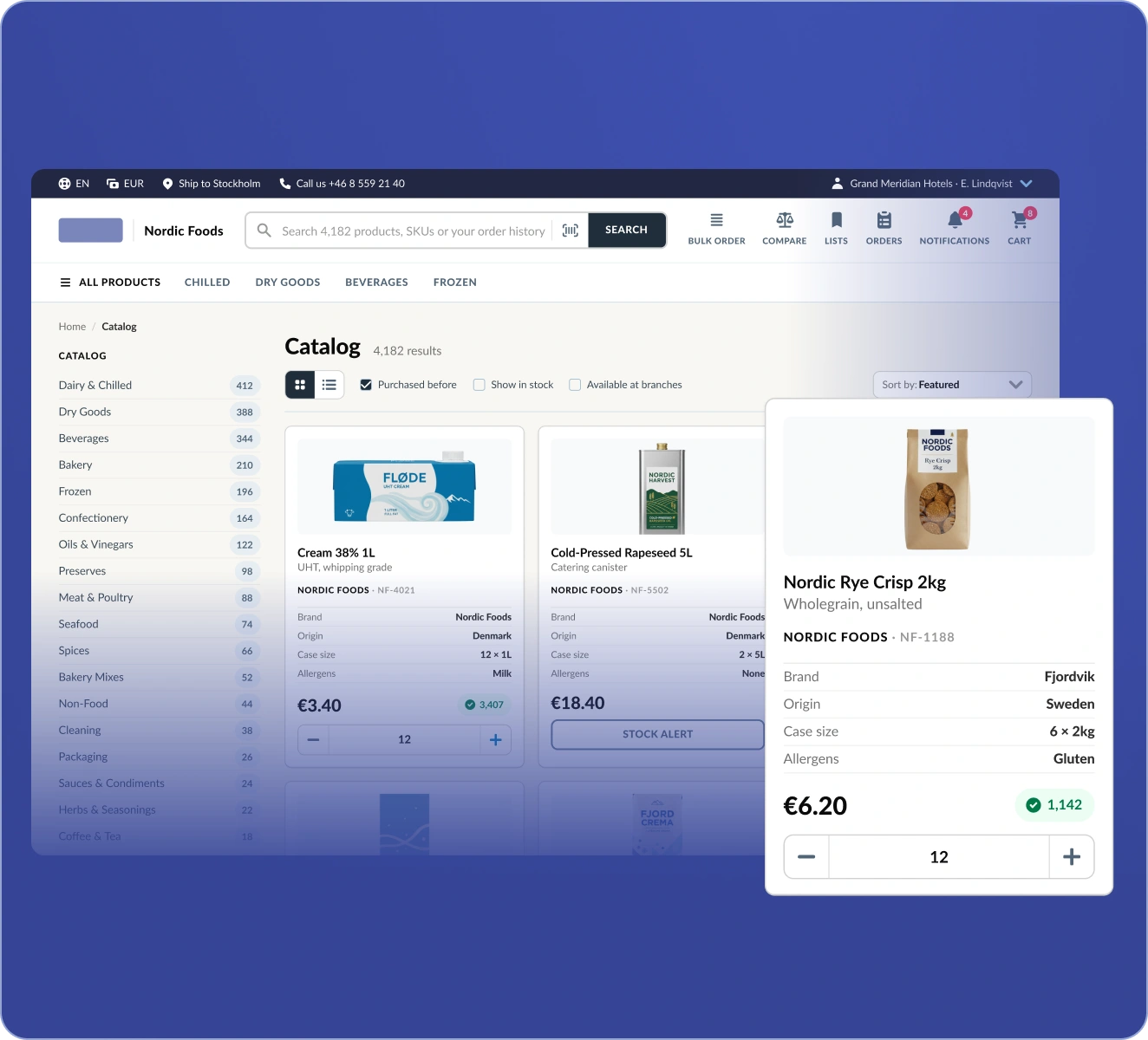
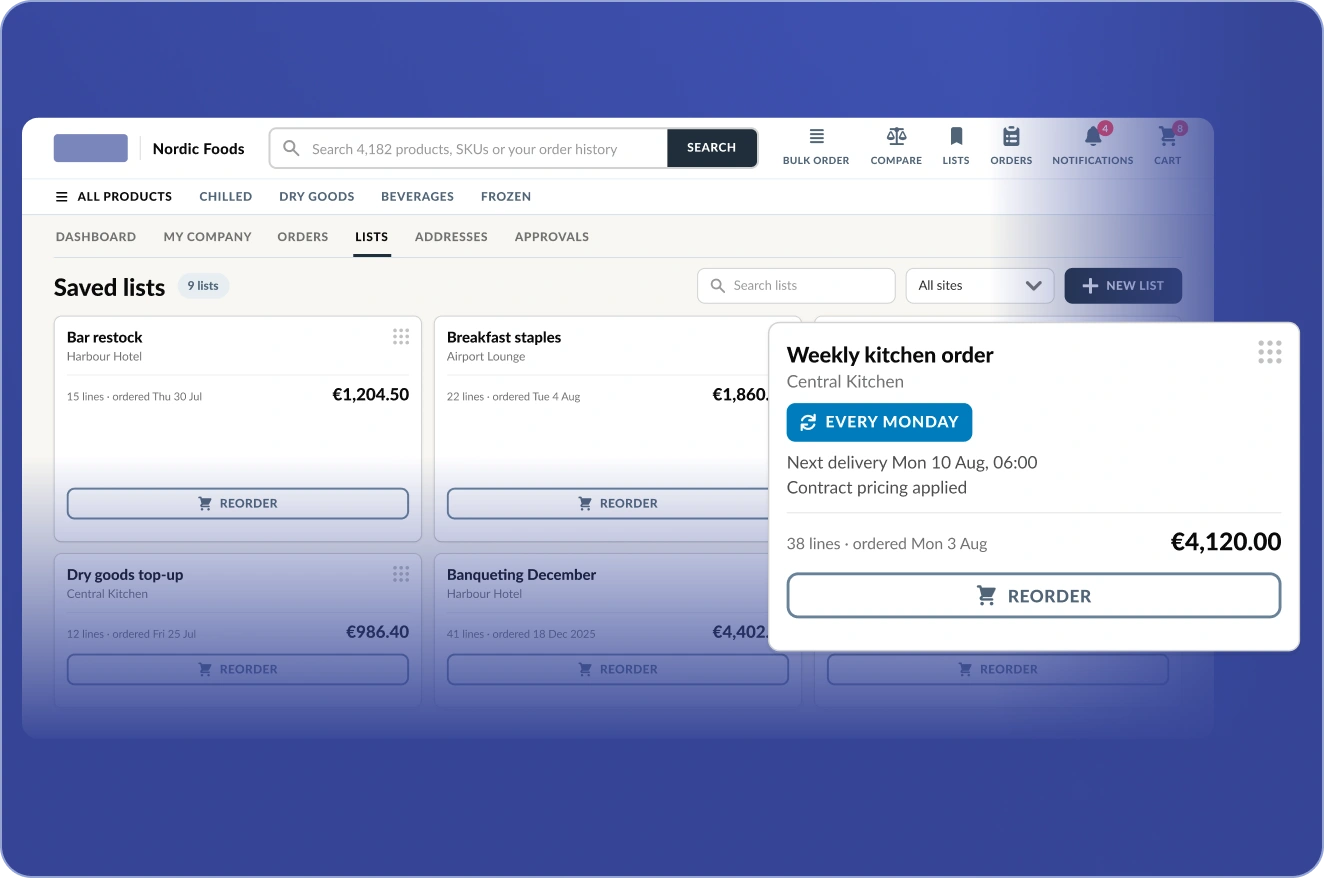
Let buyers place high-line-count and recurring orders in seconds with paste-to-order, saved lists, and templates.
-
Learn More →
Connect to buyer procurement systems for foodservice and B2B purchasing.
-
Learn More →
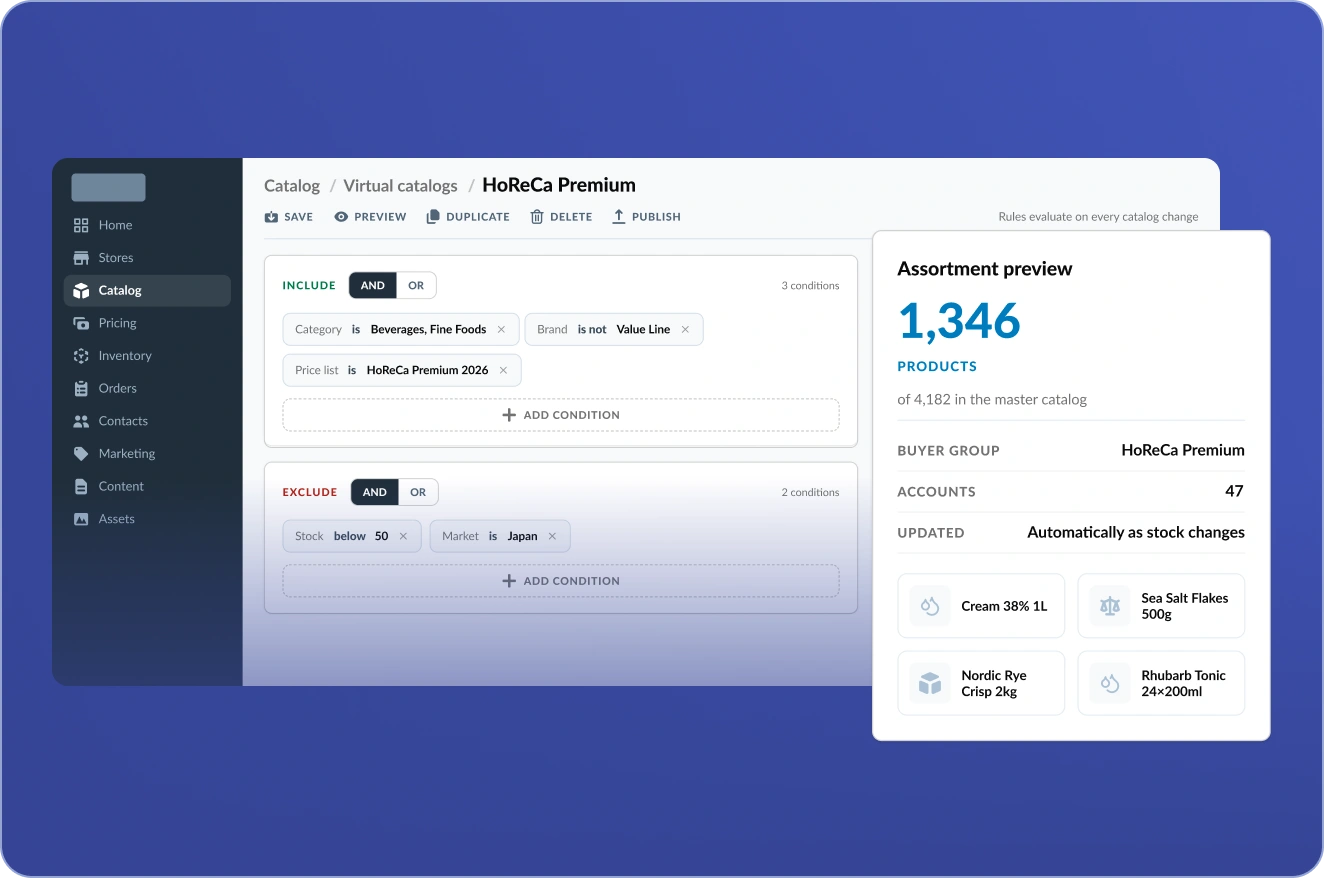
Govern fast-changing product data and run virtual catalogs, so buyers find the right SKU across large assortments.
-
Learn More →
Run multiple brands, regions, and channels from one back office, keeping catalog and pricing consistent across them.
-
Learn More →
Keep pricing, stock, and orders in sync via an API-first core.
-
Learn More →
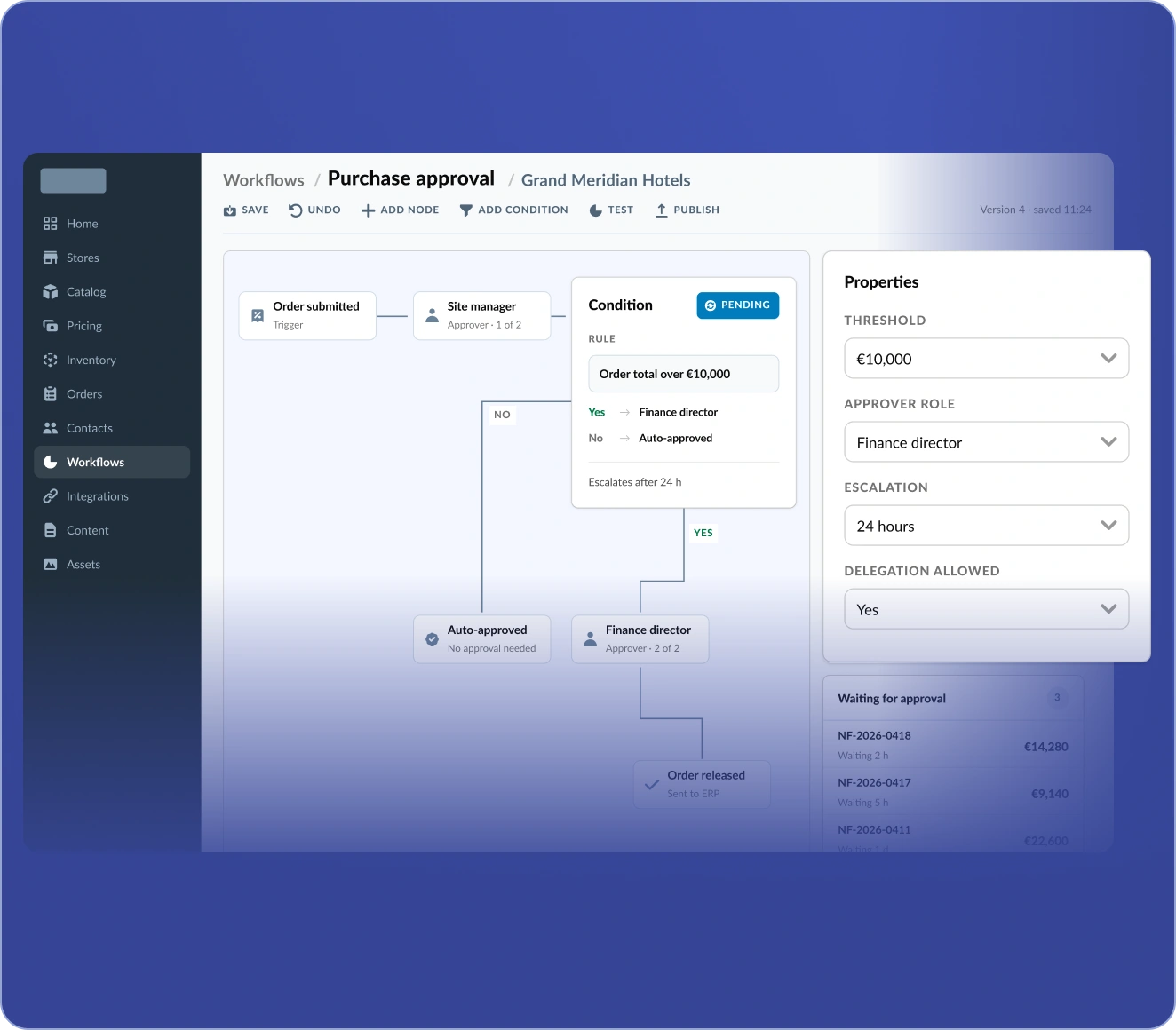
Set up custom approvals, quote-to-order, and delegated purchasing to match how each B2B account buys.
-
Learn More →
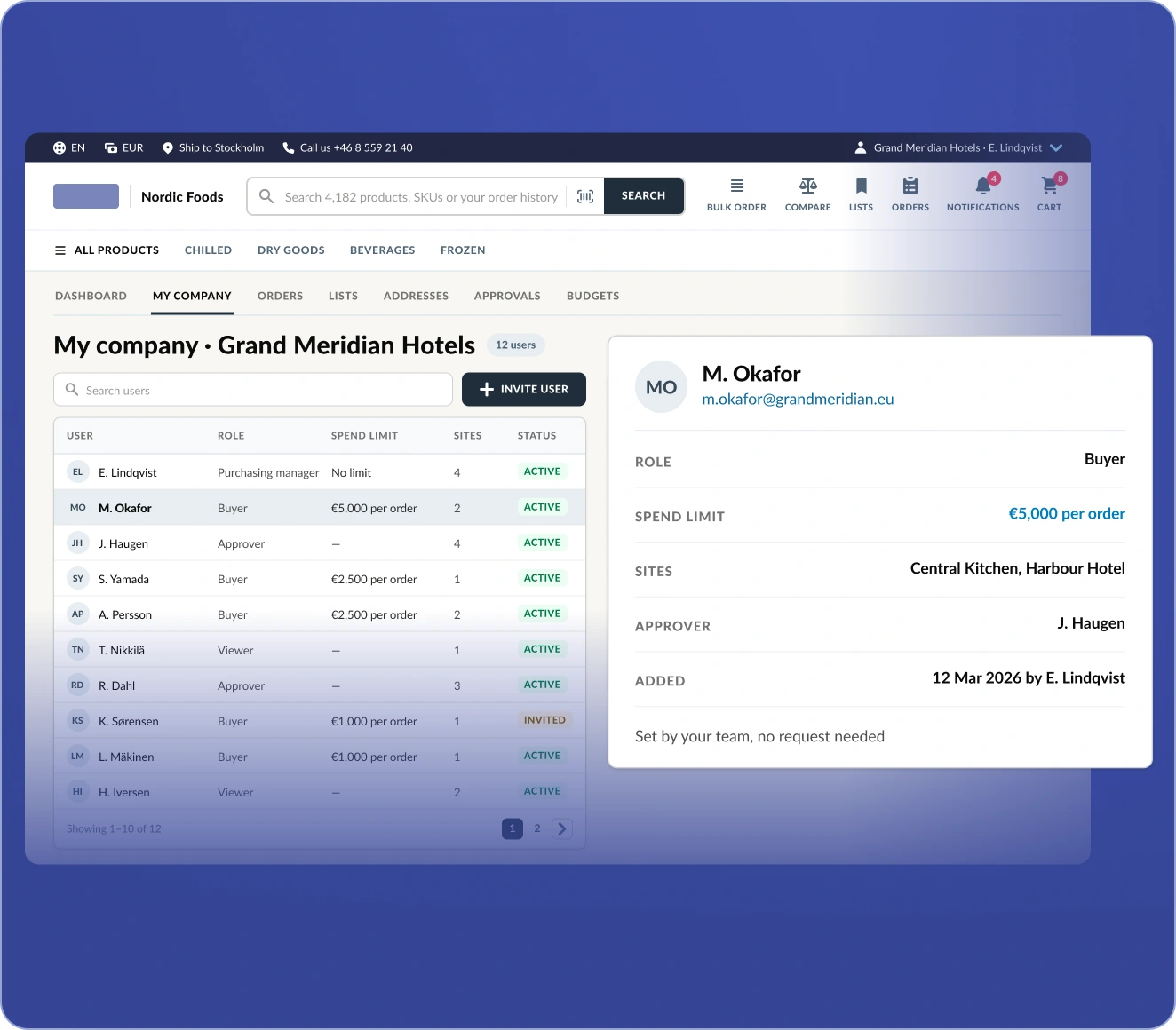
Let buyers manage their company accounts, freeing reps for higher-value work, not taking the account from the rep or distributor.
AI-Powered Capabilities for FMCG eCommerce
Virto OZ
AI Assistant
AI Assistant
Put an AI copilot in the back office that answers questions and automates tasks, so your team manages catalogs, orders, and pricing with less manual work.
AI Intent
Search
Search
Let buyers find the right SKU by intent, whether they search by brand, pack size, informal name, or product code, and cut the time to reorder from large catalogs.
AI Product
Categorization
Categorization
Auto-classify and enrich new products as they arrive, so you onboard suppliers and publish new lines in hours instead of weeks.
Explore All AI Features
AI-Native
Conversational Buying
Conversational Buying
Let buyers order in plain language without navigating the catalog, so recurring and high-line-count orders get placed in seconds.
AI Product Assistant
Answer buyer questions right on the product page from your own specs and datasheets, so buyers self-serve, pick the right item, and raise fewer pre-sales tickets.
What FMCG Teams Build with Virto Commerce
Common scenarios, each mapped to the buyer's outcome, with a path deeper into the right product or solution.
-
Learn More →
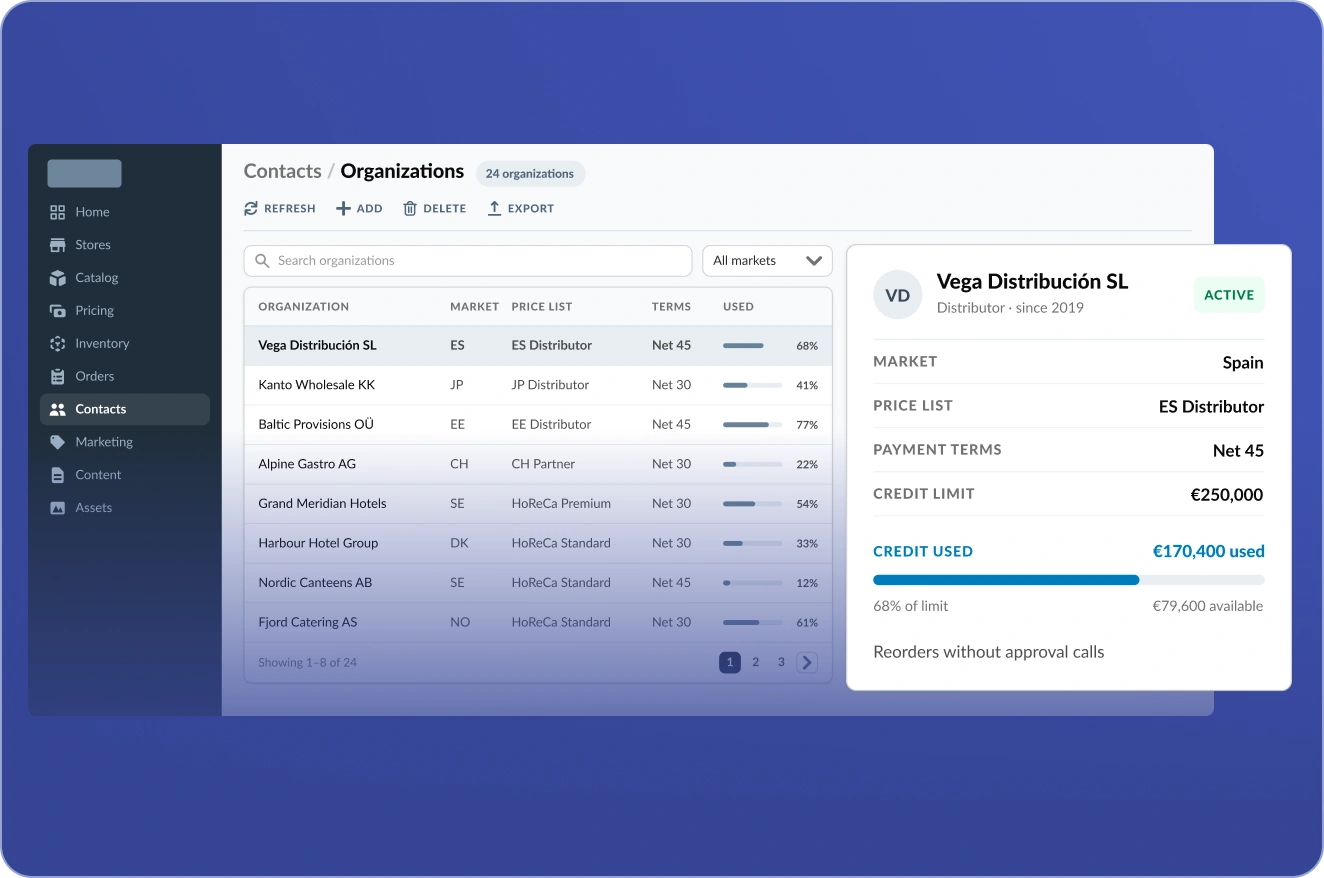
Onboard distributors with their own catalogs, pricing, and credit terms, and let them selfserve repeat orders.
-
Learn More →
Serve hospitality buyers with punchout, contract catalogs, and fast reordering.
-
Learn More →
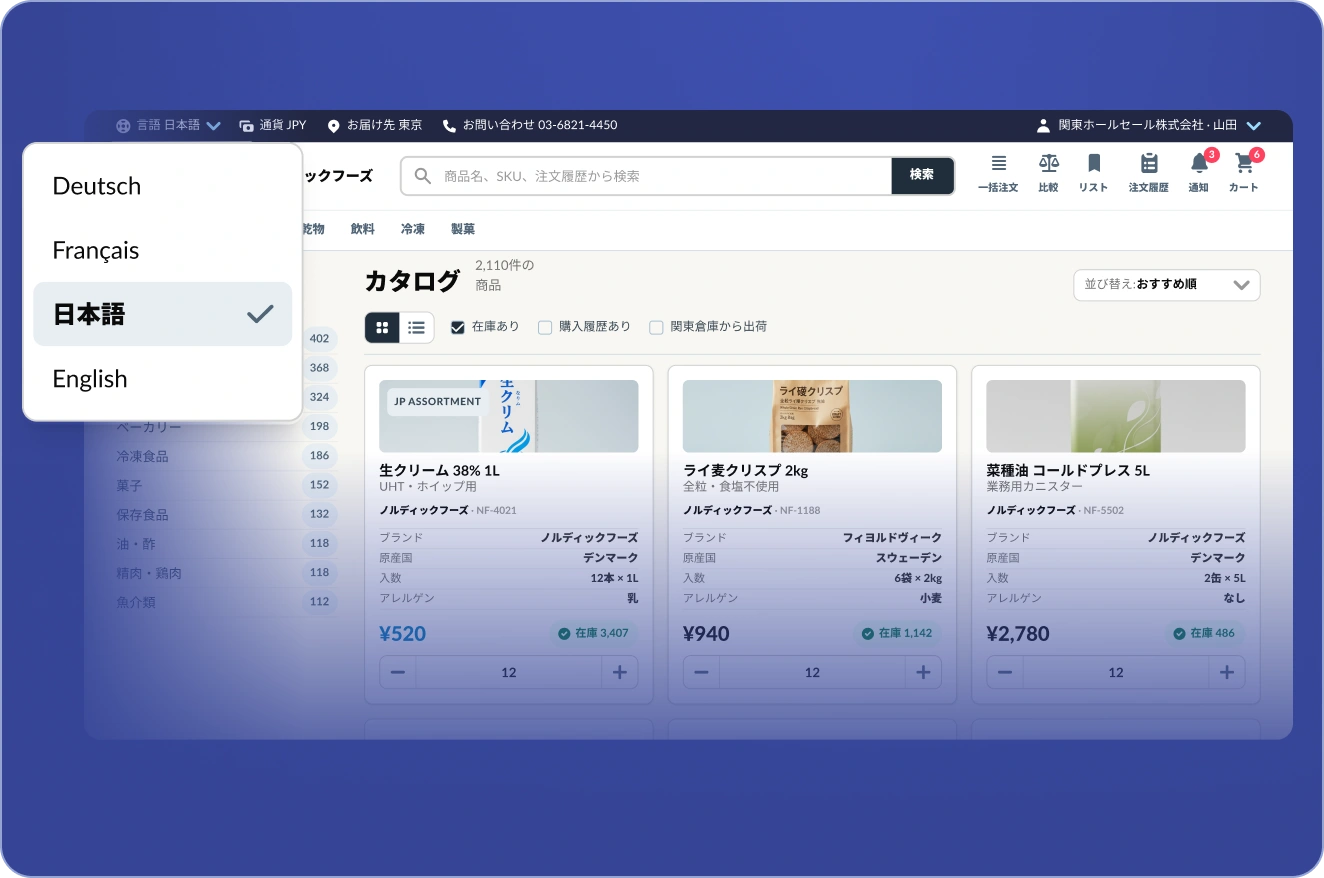
Sell across countries with multi-language, multi-currency, and localized assortments
-
Learn More →
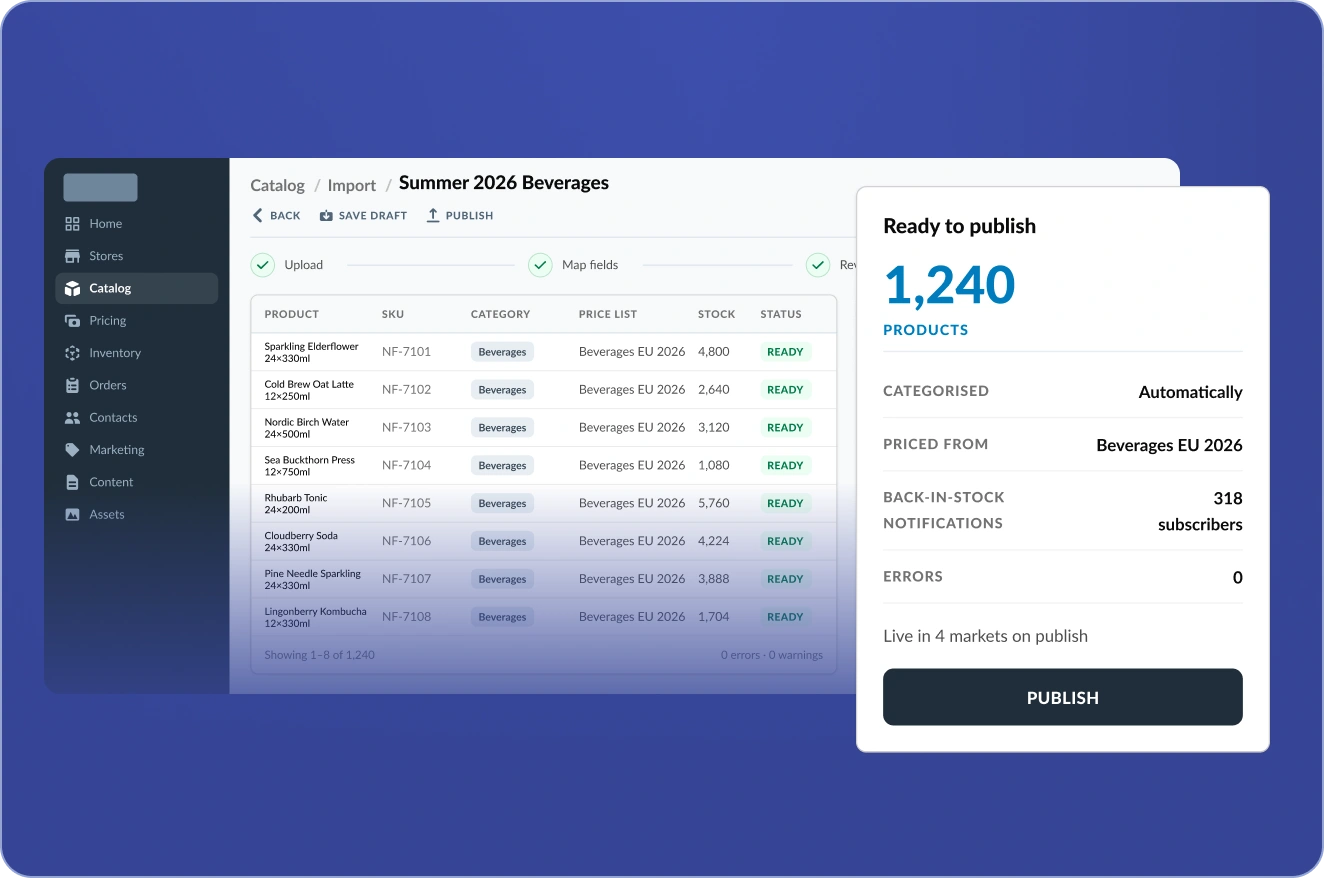
Bulk-import, categorize, segment, and price new ranges, with back-in-stock signals.
-
Learn More →
Go direct to consumers on the same platform,with B2B pricing kept intact.
-
Learn More →
Segment catalogs and run virtual catalogs for different buyer groups.
Results FMCG Teams Achieve with Virto Commerce
~30%
of OpCo revenue via mobile-first B2B ordering
~80%
digital-order adoption after migrating from Adobe Commerce
1,000
of price lists consolidated B2B + B2C in one store, pricing intact
3 weeks
to go live with Virto Commerce
Virto Commerce for FMCG: Tech Properties
Source-available .NET platform that plugs into your existing systems, with zero lock-in.
Composable Architecture
Virto Atomic Architecture™ and a modular core: adopt only the modules you need, then swap and extend.
API-First Integrations
GraphQL and REST APIs with prebuilt ERP, PIM, and CMS connectivity.
Security & Compliance
Audit logs, role-based access control, data-residency controls, and SOC 2.
AI-Ready Foundation
AI in FMCG commerce, embedded inside the workflows where it actually brings value.
Architectural Excellence of Virto's Innovation Platform
One Commerce Core,
Every System Stays in Its Lane
Every System Stays in Its Lane
Modernize module by module and market by market, so the highest-risk moment in a migration never puts daily ordering at risk.
A catalog of 25M+ products with 1,500+ daily orders, unified across 200+ stores.
60+ modules running across four storefronts on one core.
How FMCG Leaders Succeed with Virto Commerce

Mobile-first B2B ordering for
fragmented retail across 25+ countries.
Thousands of customer-specific price lists consolidated, B2B and B2C in one store.
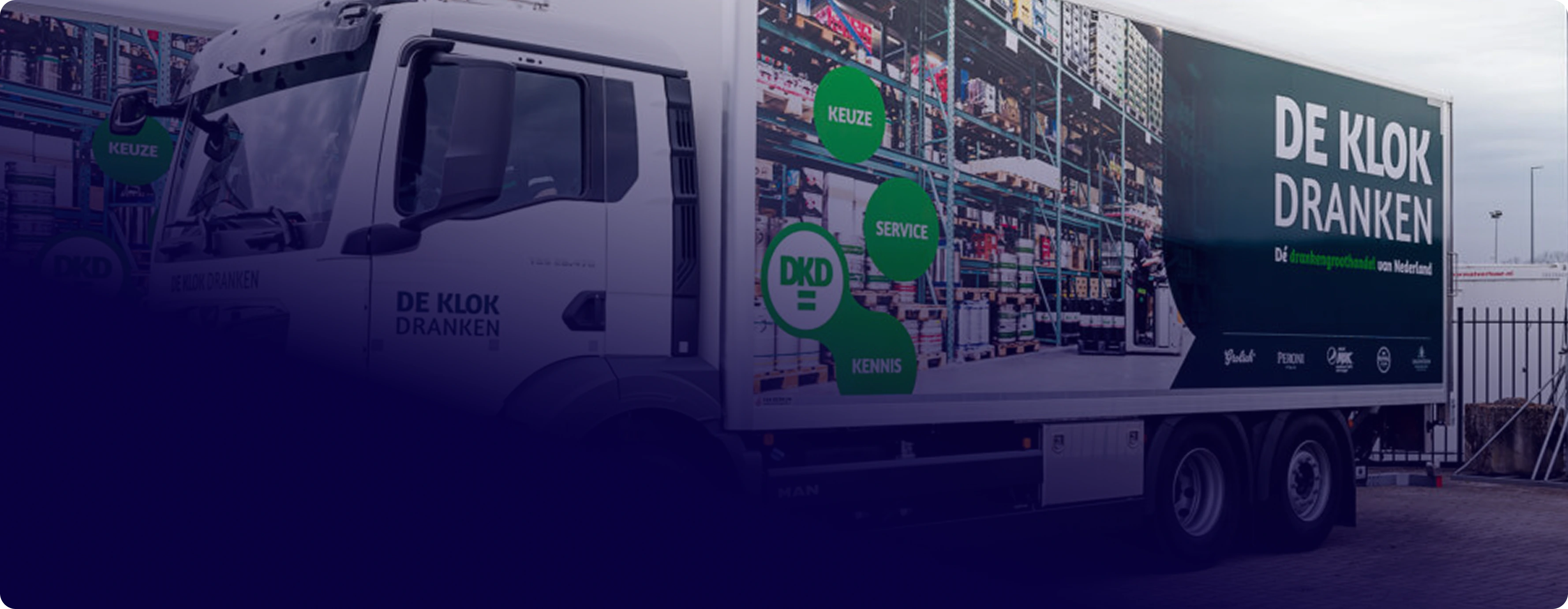
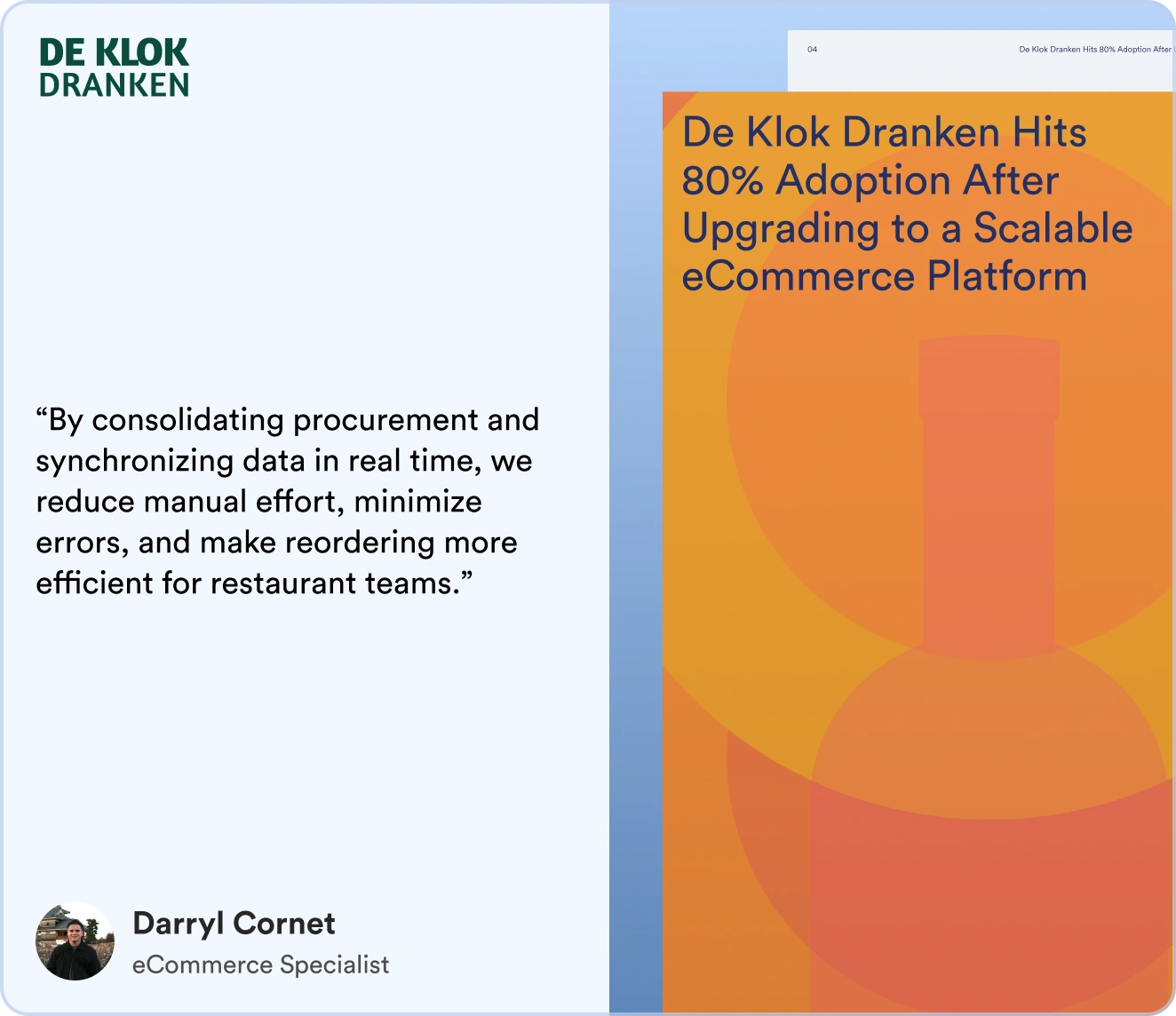
Migrated off Adobe Commerce and reached roughly 80% digital-order adoption.
Your Questions, Answered
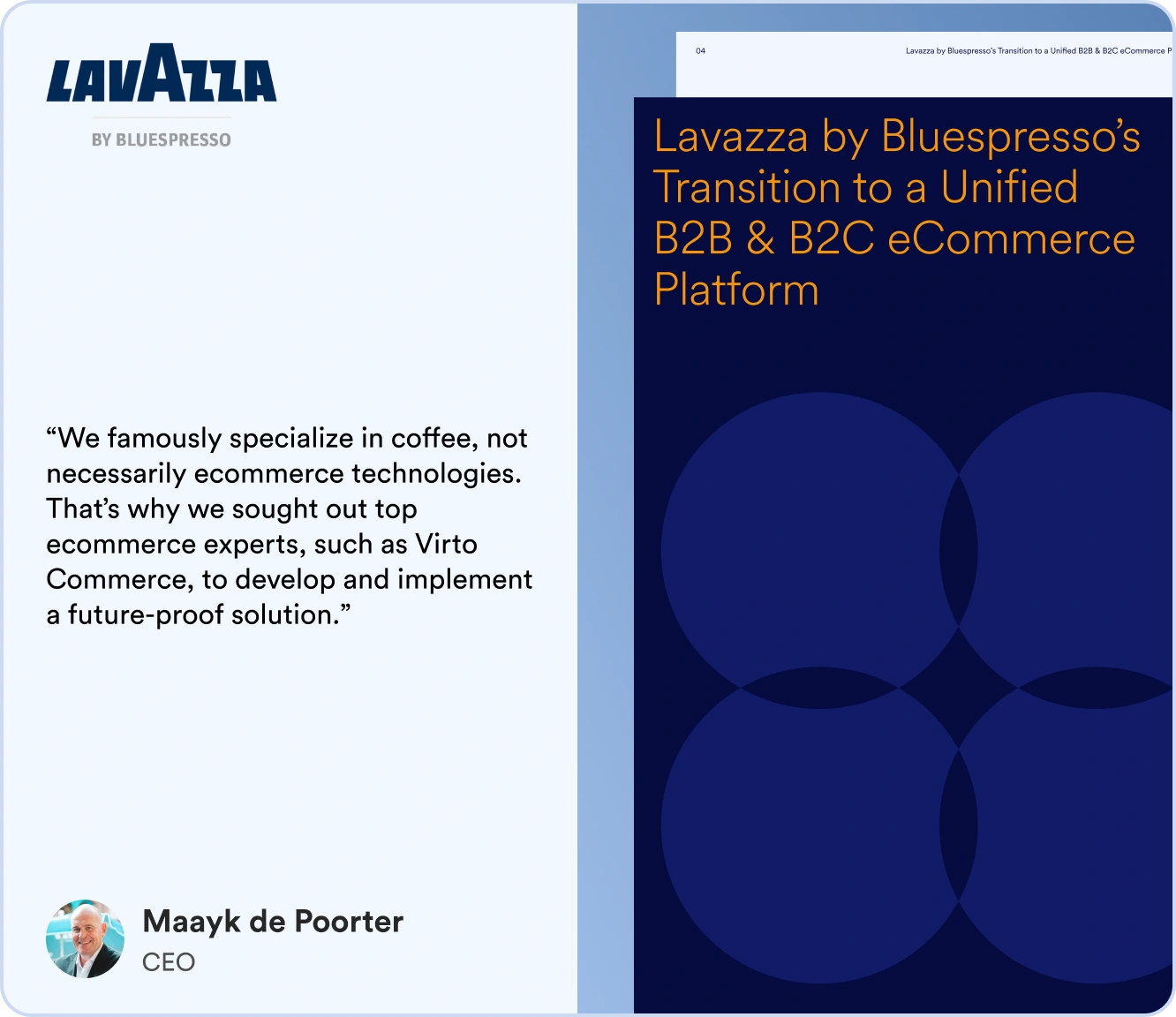
Yes. One composable core runs B2B, B2C, B2B2C, and DTC together, each with its own pricing and experience. Lavazza runs three customer categories in one store, and you can add a DTC channel without a separate stack.
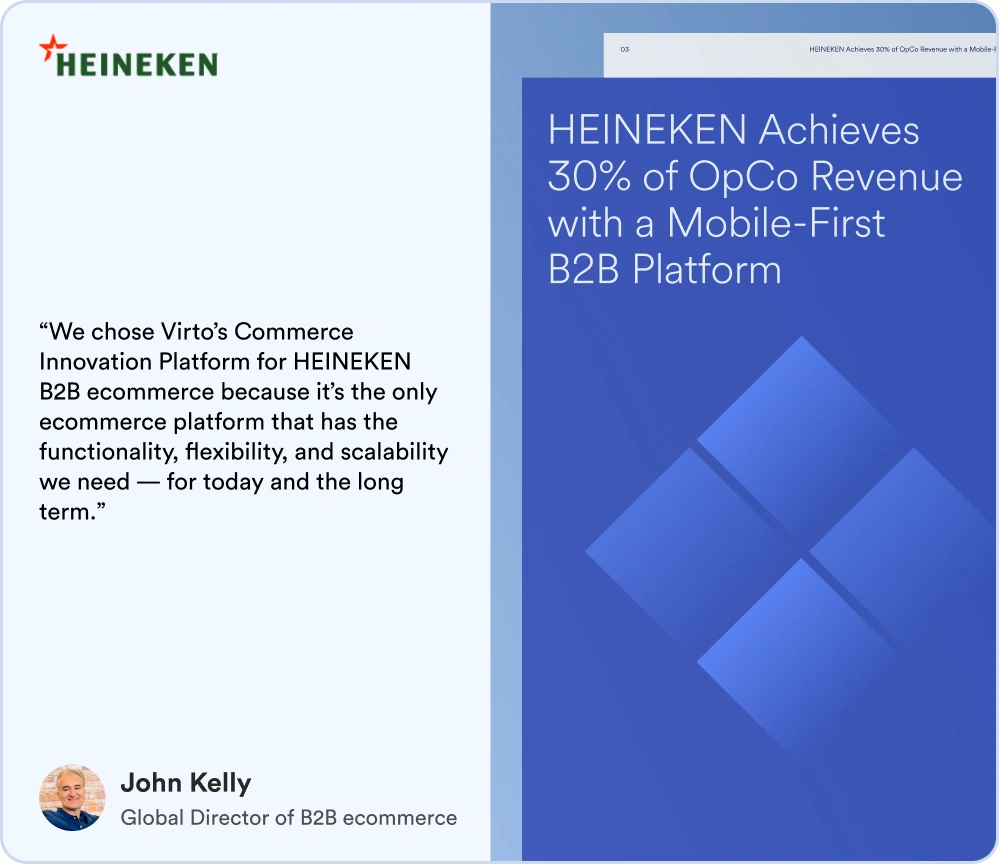
Yes. It is API-first, so pricing, stock, product data, and orders stay in sync with your existing systems in real time. HEINEKEN consolidated 250+ integrations across 25 operating companies, with every system of record left in place.
Yes. The same core runs your branded storefront and a multi-vendor marketplace where distributors and third-party suppliers sell alongside your catalog, with vendor onboarding, commission rules, and payouts built in. Many FMCG teams start with the storefront and add the marketplace once distributor demand is visible.
No. The platform is modular, so you migrate module by module and market by market, and add channels, brands, and regions on the same core. Daily, high-frequency ordering keeps running throughout.
Each account gets its own price list, assortment, and contract terms, applied automatically at login, alongside bulk ordering, reorder templates, and approval workflows. Lavazza consolidated thousands of manual price lists this way.
A source-available, modern .NET stack (ASP.NET Core, EF Core, GraphQL, Redis) with a Vue 3, Tailwind, and TypeScript frontend. It is API-first, composable, and MACH-aligned, so developers can extend it and run it headless.
Yes. Audit logs, role-based access control, data-residency controls, and secure authentication, with SOC 2 certification and cloud-native deployment for enterprise security and scale.
Composability keeps the cost of change down: you extend the platform module by module instead of paying for a full rebuild every time the business shifts. HEINEKEN cut its platform upgrade time from roughly 20 weeks to 10 and consolidated 250+ integrations across 25 operating companies, so each update takes less time and less budget.
It is the software fast-moving consumer goods companies use to sell to distributors, retail, HoReCa, and direct buyers online, handling account-specific pricing, contract catalogs, bulk and repeat ordering, and real-time inventory synced with the ERP and PIM.
It is built for B2B and complex routes-to-market — recurring, high-frequency replenishment, account-specific pricing and negotiated terms, large and fast-changing catalogs, and both self-service and sales-assisted ordering, rather than one public price and a single buyer type.
Most FMCG capabilities are available out-of-the-box, which shortens time to market, and a phased rollout lets teams go live business unit by business unit and region by region. A typical Virto Commerce deployment takes anywhere from 4 to 6 weeks, heavily depending on your business requirements and architectural complexity.