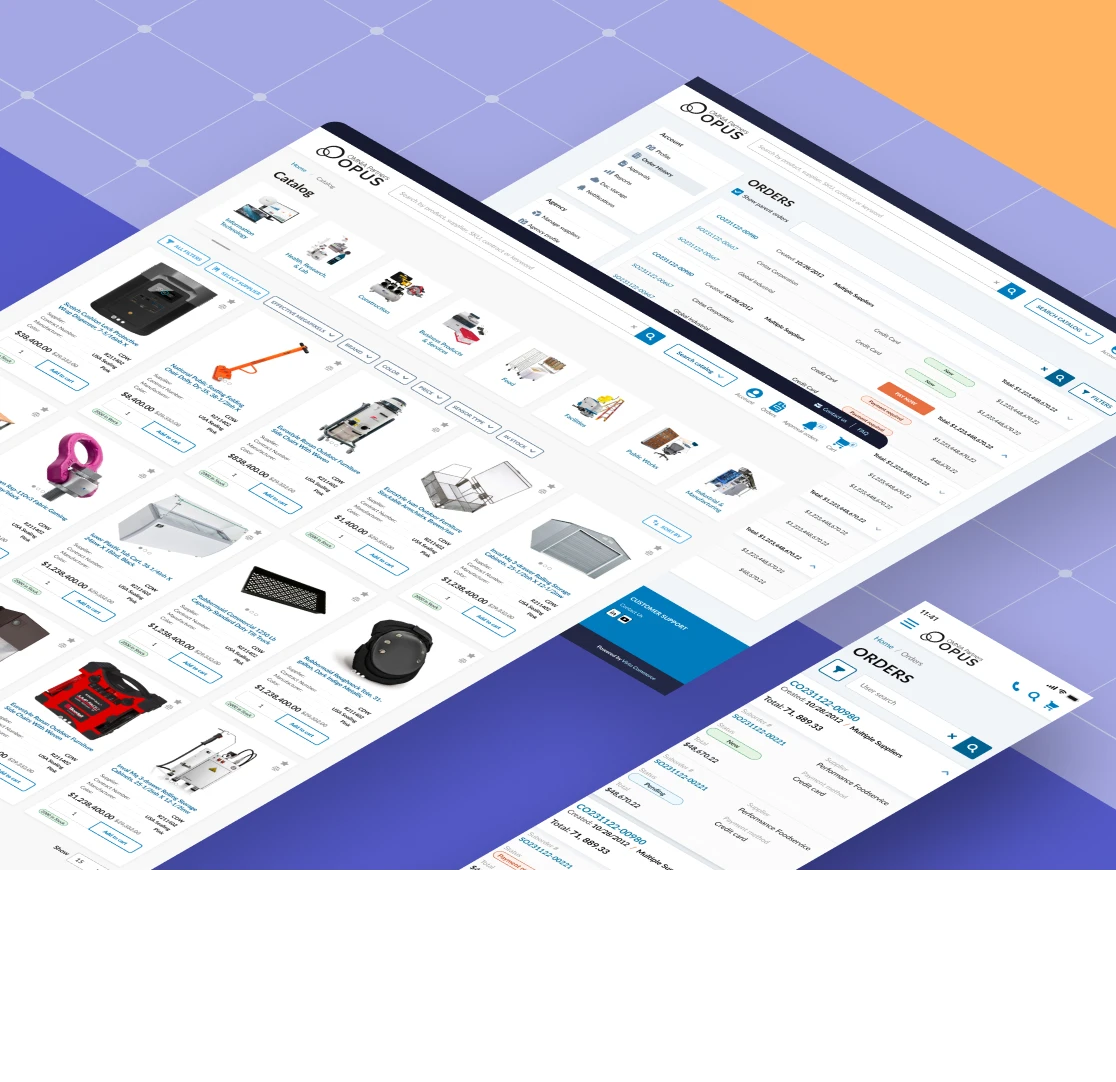


AI Embedded Where Commerce Actually Happens
AI Capabilities Across the Entire Commerce Lifecycle
-
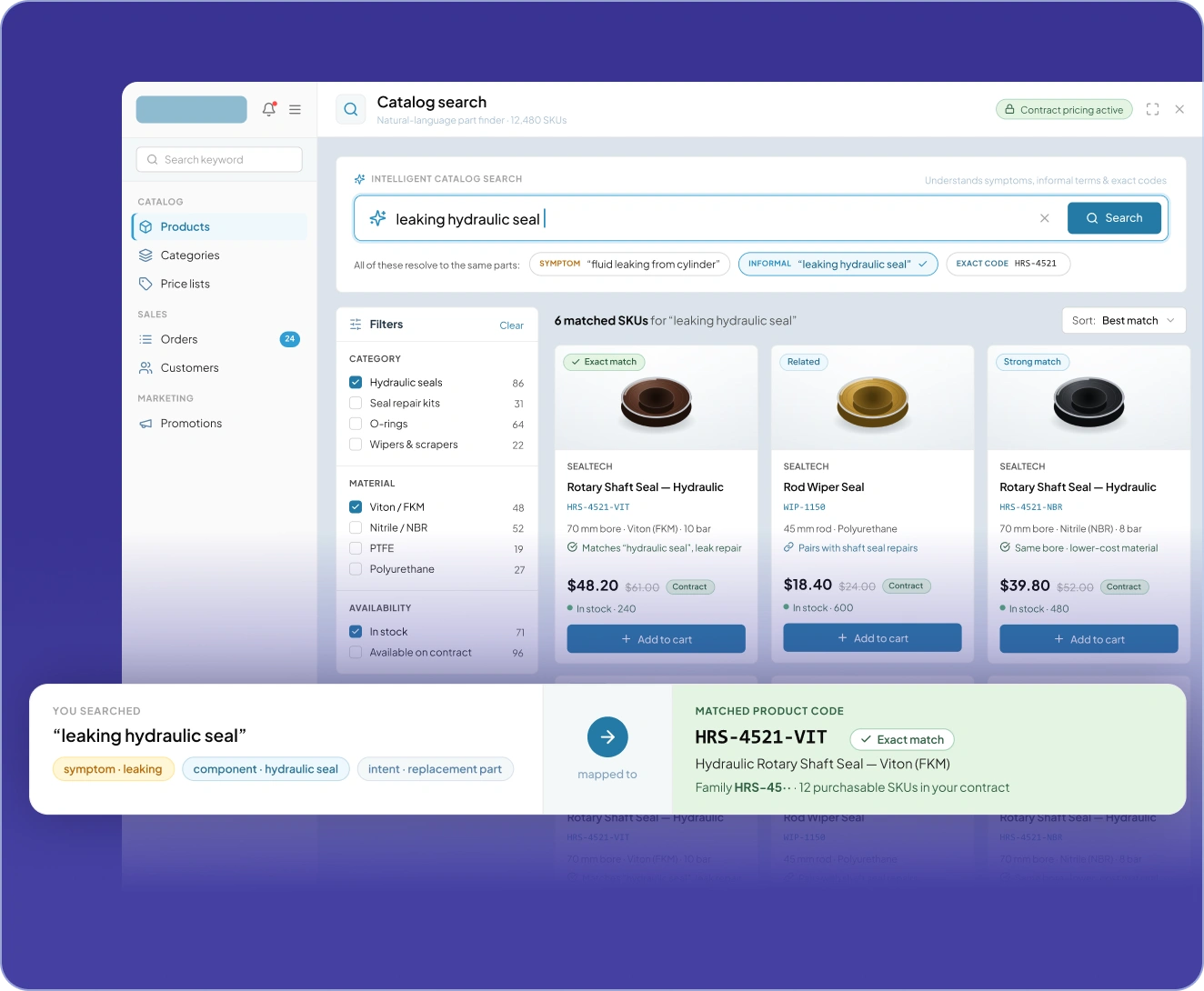
Virto's AI-driven intent-based search maps natural-language queries to the right SKUs, whether buyers search by symptom, application, informal term, or exact product code. AI recommendations surface what buyers can actually purchase, filtered by contract terms and account pricing.
-
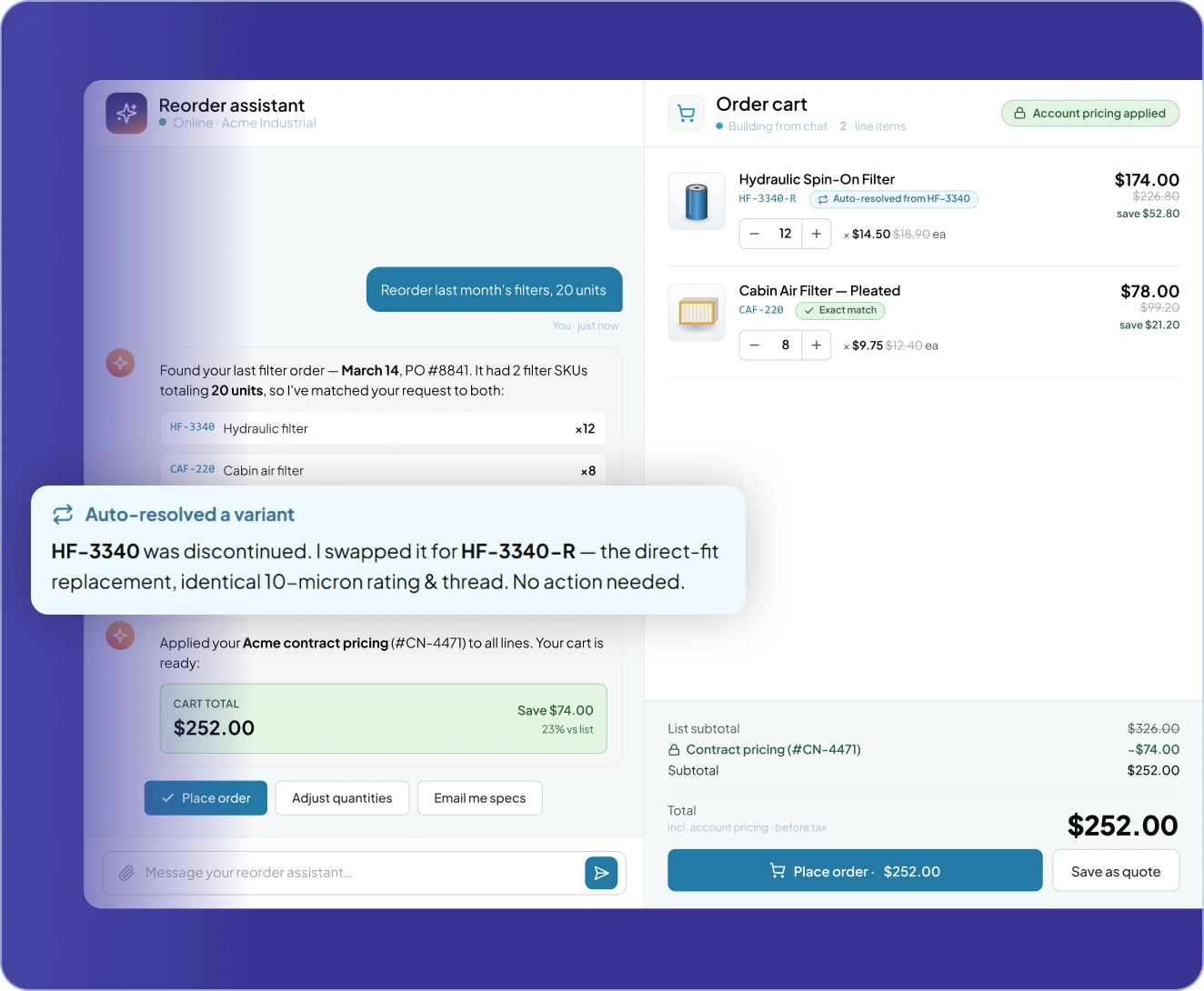
Conversational buying turns plain-language requests into accurate carts with pricing and variants resolved automatically. AI Product Assistant answers product questions on the product page before buyers commit. AI agents transact with your store too: the Universal Commerce Protocol (UCP) for buying, and Order Network eXchange (onX) for fulfillment, with no per-agent integration required.
-
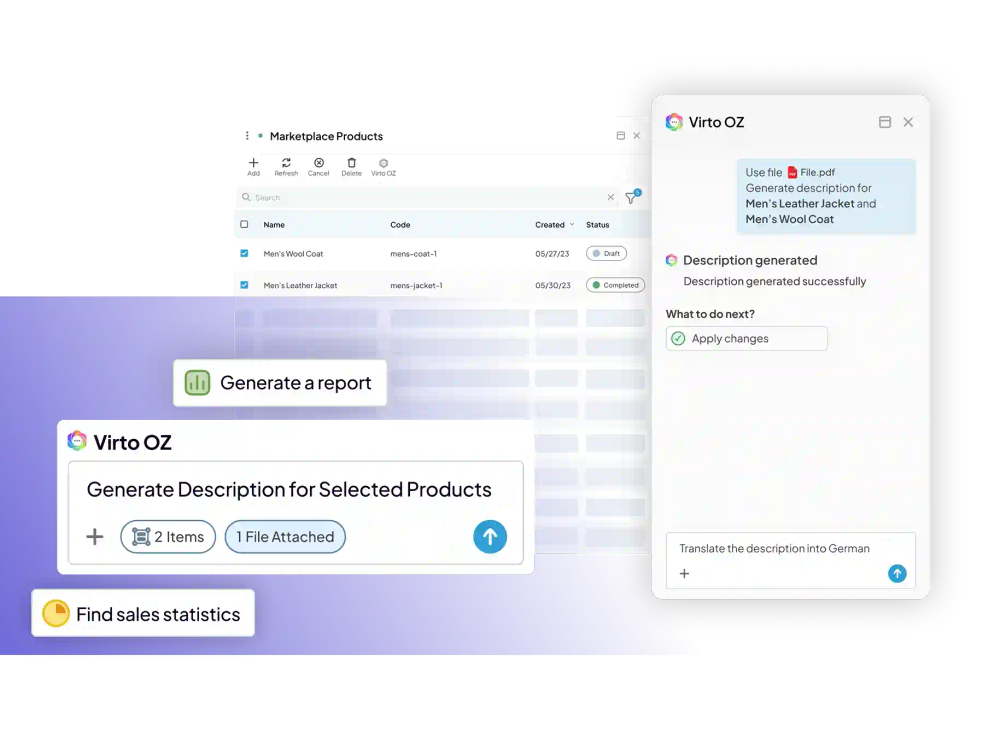
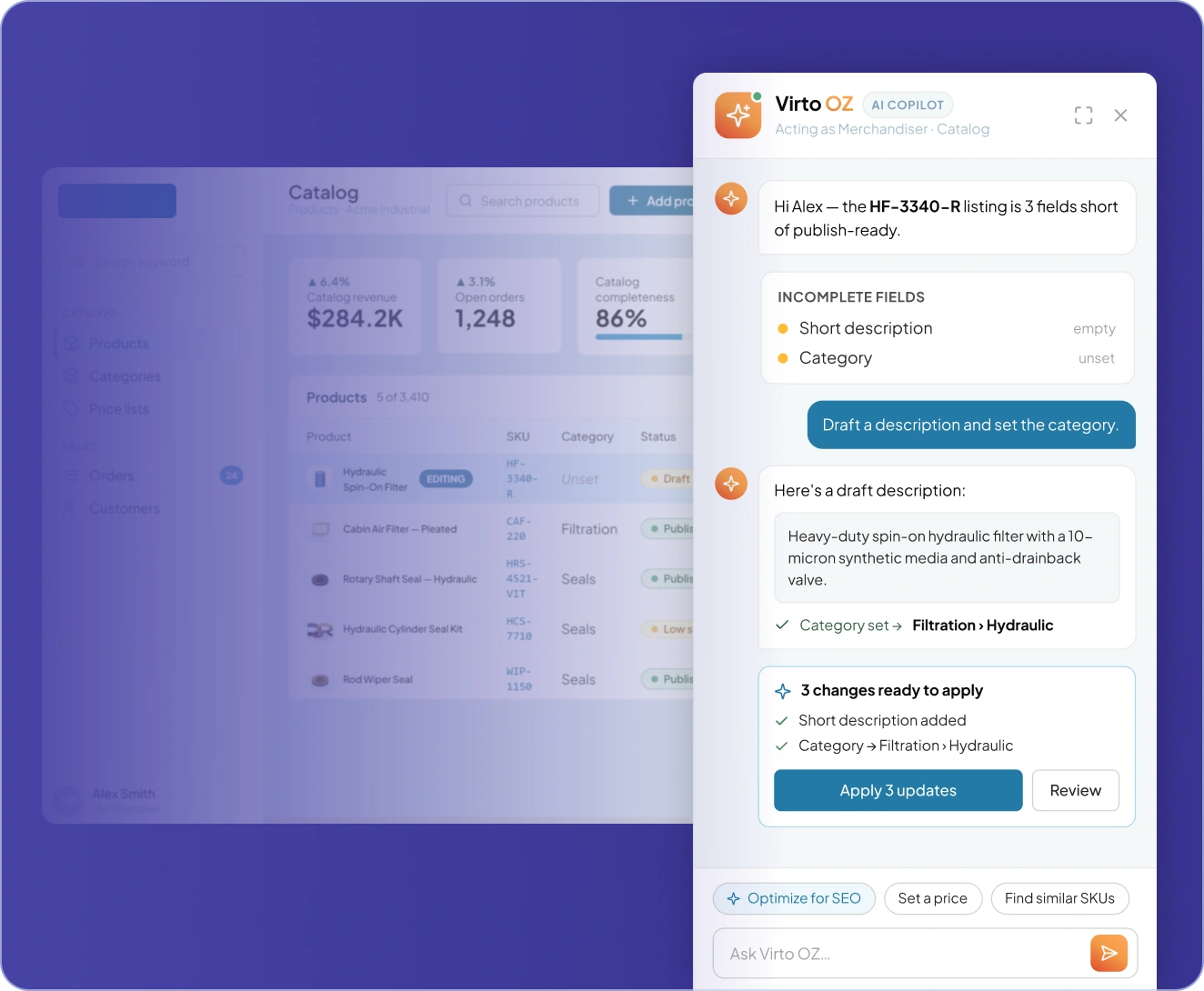
AI copilot Virto OZ guides buyers through ordering and helps merchandisers, developers, admins, marketplace operators, and vendors move faster. In the operator and vendor portals, it edits catalogs and updates offers from a plain prompt, and every change is reviewed before it saves. AI-powered localization ships storefront UI and content across languages in hours.
-
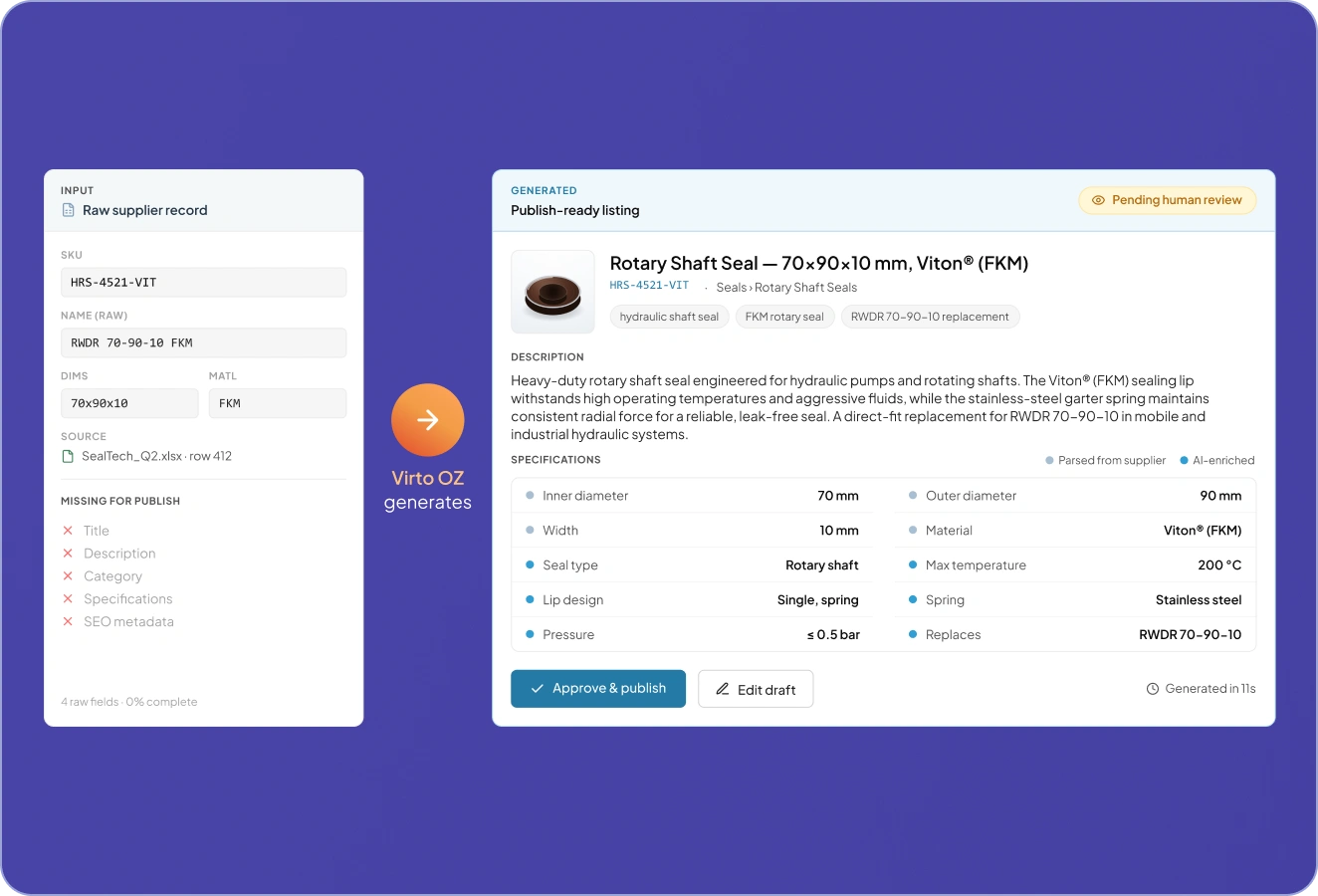
Virto's AI content generator creates product titles, descriptions, and attributes from minimal input, onboarding suppliers in hours. AI categorization classifies incoming SKUs at scale, with human review before publishing. In the marketplace, vendors write and translate descriptions too, no operator bottleneck.
-
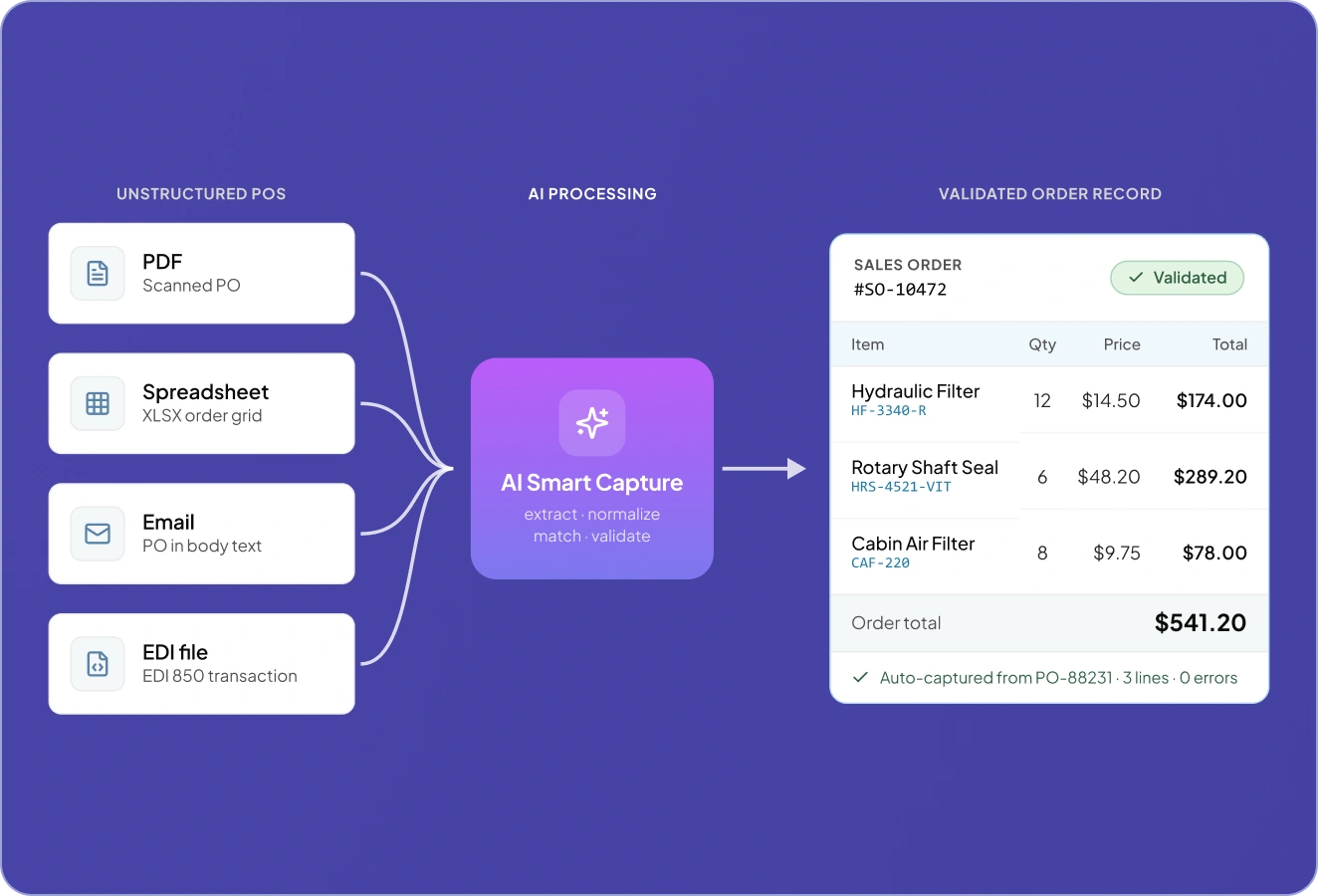
AI Smart Capture reads unstructured POs and converts them into validated order records automatically. Buyers can place orders by uploading PDFs, spreadsheets, emails, or EDI files, with no manual re-entry.
-
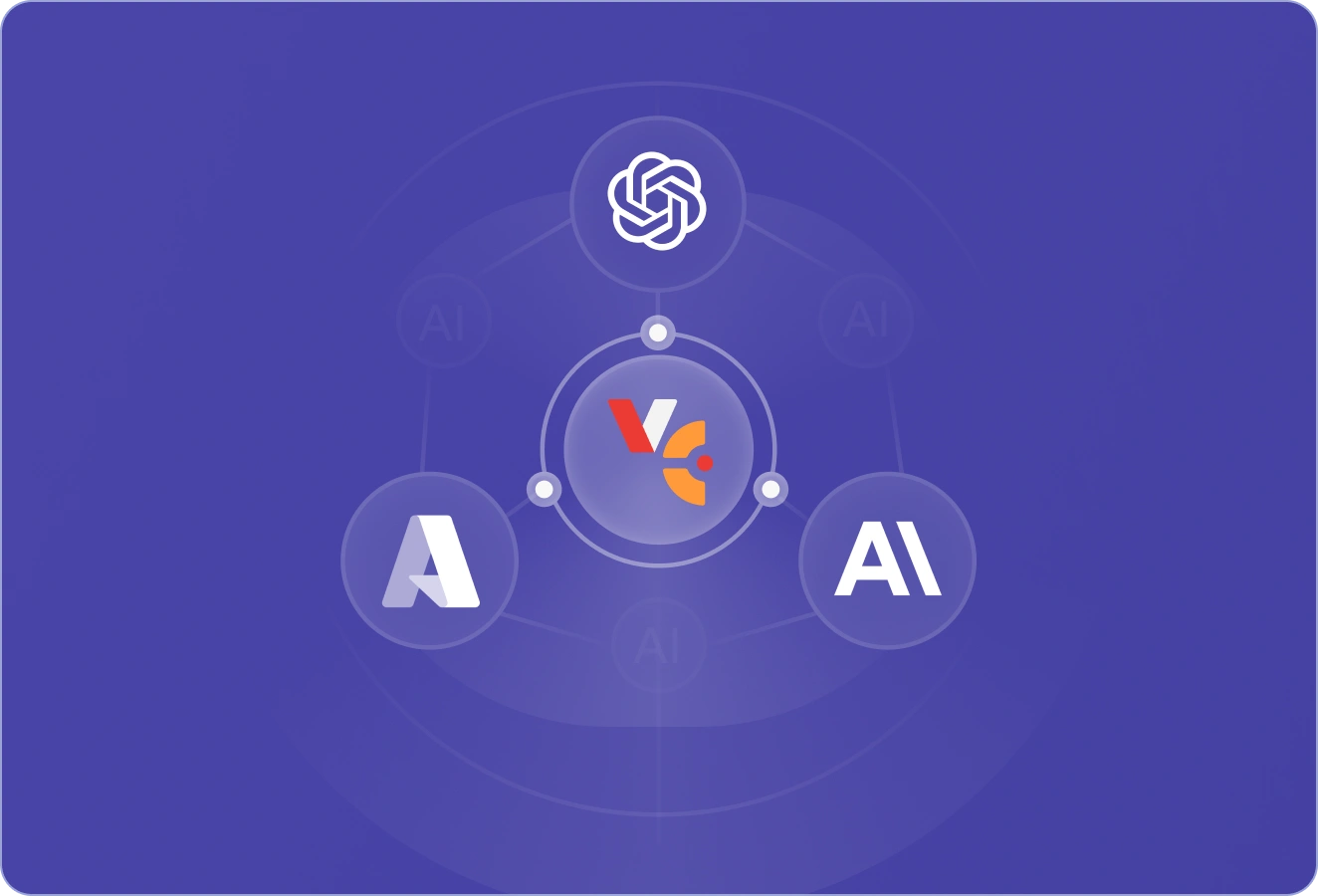
Model-agnostic by design: connect any model to run your store, OpenAI, Azure AI, Anthropic, or your own. That's the AI you bring in. For the agents that come to you, see Agentic Commerce.
An operator's or vendor's catalog edits are reviewed before they save, never applied automatically.
Designed to Connect, Not Lock In: You Keep Full Control
Virto connects to the AI models you already use: OpenAI, Azure AI, Anthropic, or your own. Every AI capability stays open to your team. Change the model behind a workflow, adjust how it runs, or add your own logic one piece at a time, without rebuilding the platform.
Every output can be edited, approved, or discarded before publication.
AI usage is configurable per workflow: turn on, scope, or restrict at the module level.
AI operates on your catalog data and business rules, not shared training pools.
Built for B2B Complexity
AI built for structured data, account-specific logic, and multi-supplier environments.
Supplier catalog ingestion
Hundreds of supplier feeds arrive in different formats. AI normalizes, categorizes, and enriches incoming data before it reaches your catalog team.
Contract-aware product discovery
AI applies account-specific pricing, approved assortments, and contract terms at the discovery layer, so every buyer sees only what's relevant and purchasable for their account.
Technical product understanding
Product data in industrial catalogs lives in spec sheets and engineering documents, not clean attribute fields. AI interprets it to power accurate search and recommendations where keyword matching fails.
Assisted procurement
Buyers submit informal or unstructured requests. AI maps them to valid SKUs, applies contract pricing, and routes to the appropriate approval workflow.
Why Virto AI Is Different
Virto's AI isn't a layer added on top of commerce. It's part of how the platform is built.
Built for B2B complexity from the start
Contract pricing, multi-supplier catalogs, account hierarchies, and approval workflows are core requirements here, not edge cases inherited from a consumer platform.
Working inside the workflow, not bolted on
AI operates inside catalog onboarding, order capture, and product discovery. It takes steps out where the work actually happens, instead of waiting to be invoked.
Model-agnostic and extensible
Connect proprietary models or external services through the platform's API-first architecture. Every AI capability can be configured, extended, or replaced at the module level, with no black-box outputs.
Standards-native, not proprietary
Virto speaks the open agentic-commerce standards the market is settling on: the Universal Commerce Protocol (UCP) for buying, and Order Network eXchange (onX) for order operations. No per-agent integration required.
Architectural Excellence of Virto's Innovation Platform

Look inside an AI-native ecommerce foundation
AI That Understands Commerce, End to End
Most platforms treat AI as an add-on. In Virto, AI is part of the architecture.
Every part of the system, from catalog management to buyer-facing search to B2B order intake,
can be made more intelligent, automated, and context-aware.
Recognized AI-Maturity & Platform Excellence
Virto’s commerce-first AI is recognized by leading independent research agencies such as Gartner, Forrester, McFadyen Digital, IDC, and more.

Where AI Fits Into Commerce Workflows
Virto's AI is organized across three lanes: Experience, Operations, and Integration. Each one runs inside the workflows where B2B commerce actually happens, rather than alongside them.
Catalog Onboarding Without the Bottleneck
When a new supplier feed arrives, AI categorizes, maps attributes, and manages offers before team reviews.
Order Capture from Any Format
When a procurement team uploads a PO as a PDF, AI extracts line items and creates an order record ready for approval, with no manual re-entry.
Product Content at Launch Speed
AI generates content from spec sheets and localizes it for regional storefronts. Your team approves before anything goes live.
Reduced Friction at Specific Process Steps
AI operates inside catalog onboarding, content enrichment, and purchasing workflows, not alongside them. It also connects OMS, WMS, and 3PLs to external AI agents over UCP and onX.
Human Review, Built Into Every Step
Team members review, approve, or reject every AI output before it reaches buyers or the live catalog.
Auditable Outputs, Full Control
Every AI-generated output is editable and rejectable before it affects the live system, which is what procurement-heavy and regulated environments require.
How Brands Maximize ROI with Virto

The largest North American GPO marketplace helps 14,000+ public agencies find and procure products faster across a 15M+ SKU catalog, with AI-powered search behind a 48% reorder rate.

HEINEKEN manages region-specific catalog logic, pricing, and digital ordering workflows across 25+ countries, without the manual overhead of centralised catalog maintenance.
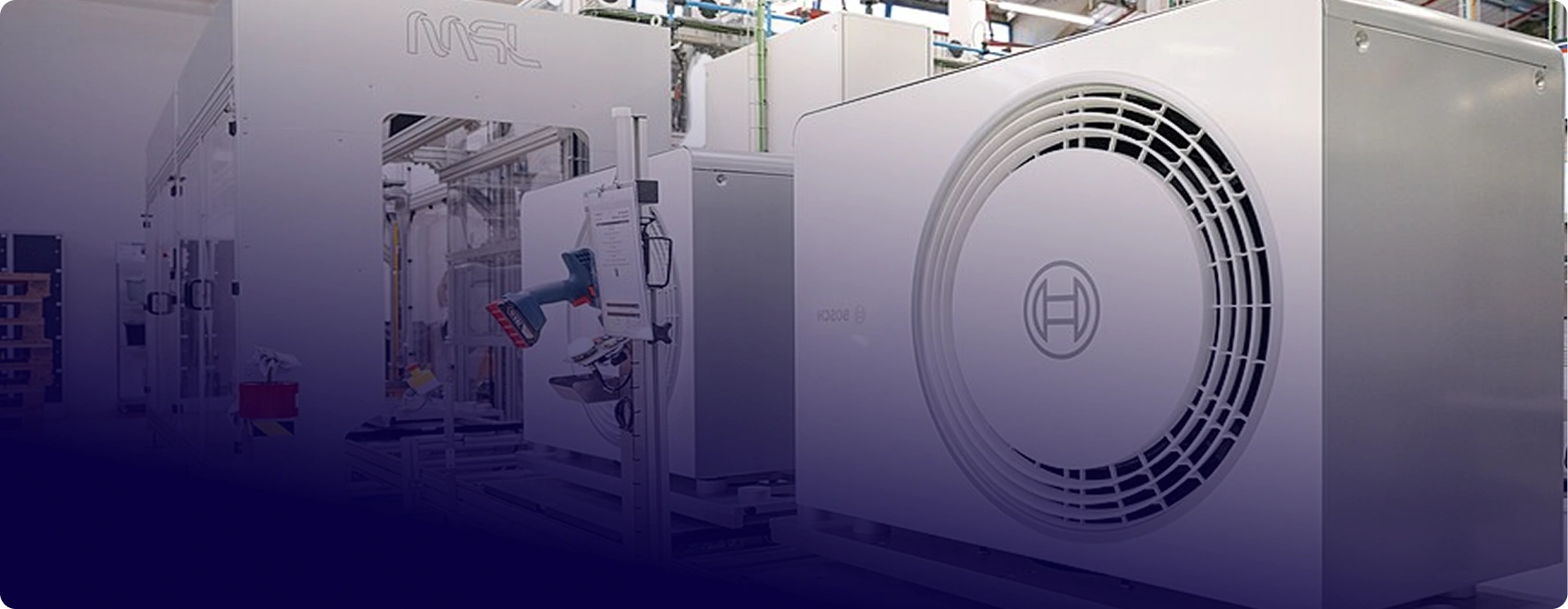
Bosch manages 22,000+ products across 50+ brand and country combinations through AI-automated catalog enrichment, without proportional headcount growth.
Virto Guarantee
We work alongside you and your systems integrator, and we stay accountable for the result: your solution delivered right, fast, and on your terms.
Feasibility, Proven First
We prove it works before you commit to scale.
Business-Aligned Delivery
We work with your systems integrator to shape an architecture that fits your goals.
Feature Development Commitment
Virto Cloud can run and maintain the platform for you, hosting and release tooling included, or your team can run it on your own cloud, a private cloud, or on-premises.
Learn More About How We Back Delivery
Explore Virto Commerce Insights
Your Questions, Answered
An AI ecommerce platform is one where AI capabilities are built into the platform's core architecture as native functions, not added as external tools. In Virto, AI operates within catalog management, product discovery, order processing, and buyer experiences, with each module sharing context and data by design.
When a new supplier feed arrives (in any format), AI maps incoming fields to your catalog taxonomy, generates product descriptions from raw spec data, and flags low-confidence assignments for human review. Your catalog team reviews exceptions and approves outputs before anything publishes. New suppliers onboard in hours, not weeks.
Yes. Virto's API-first, model-agnostic architecture supports connections to OpenAI, Azure AI, Anthropic, proprietary models, and external services like Algolia, Power BI, and Builder.io. Teams can bring existing AI investments and wire them into commerce workflows without rebuilding the platform.
AI-generated output (product descriptions, categorization decisions, enriched attributes) enters a review queue before it reaches the live catalog. Outputs can be edited, approved, or discarded. AI usage is configurable per workflow, so teams can scope or restrict AI at the module level.
Virto applies account-specific logic at the discovery and cart layer. Buyers see only products and pricing relevant to their contract terms and approved assortments. Recommendations respect purchasing permissions. Order capture validates against account-level rules before routing to approval.
Yes. AI capabilities can be enabled, scoped, or restricted at the module level. Teams can configure which workflows use AI assistance, what data AI can access, and what level of human review is required before outputs affect the live system.
Add-on AI tools operate outside the platform and require separate maintenance, integrations, and vendor relationships. Virto's AI is embedded in platform modules. It has direct access to catalog data, order context, user roles, and business rules. This makes it more accurate and operationally useful than a generic external tool applied to the same data.
The most practical B2B applications include intent-based product search, automated catalog content generation, AI-assisted categorization, smart order capture from unstructured purchase orders, contract-aware product recommendations, and AI-guided storefront localization. Virto supports all of these as native platform capabilities.
Yes, over the Universal Commerce Protocol (UCP), an open, Google-led standard. Any compatible agent can find products, build a cart, and check out on your store. You stay the merchant of record: checkout, pricing, and data remain yours.
Through onX (Order Network eXchange), the Commerce Operations Foundation's open standard for order operations. One adapter connects order, inventory, and fulfillment across your systems and any agent, without point-to-point integrations.
No. A model you bring in, OpenAI, Azure AI, or Anthropic, makes AI work inside your store. Agentic commerce makes your store transactable by agents outside it. Virto does both.
See how AI Works Inside B2B Commerce Workflows
Book your discovery session with our digital experts.