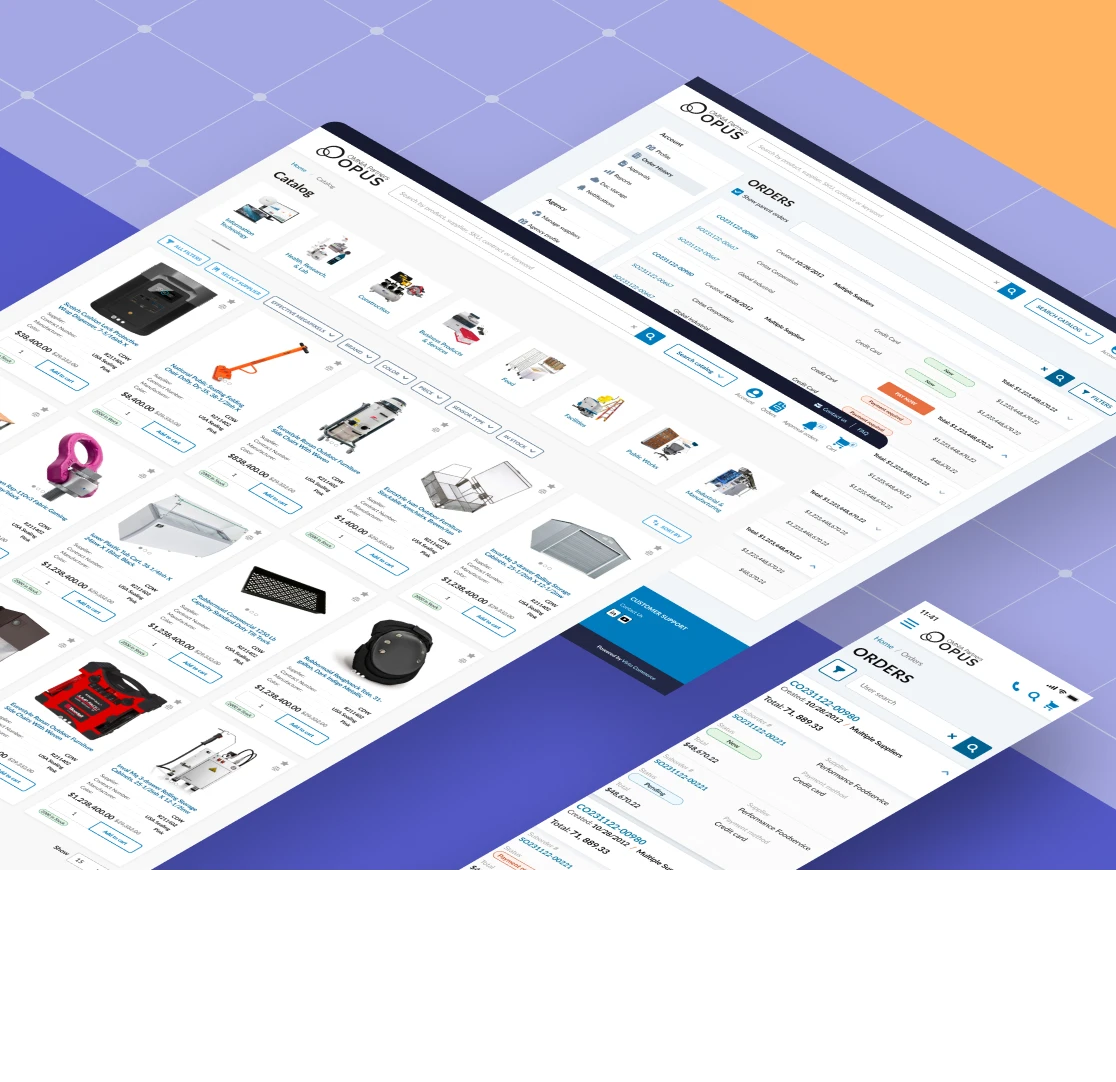


Integrations for Evolving Commerce Ecosystems
Systems by Business Domain
All Systems
ERP / Operational Core
PIM / MDM
CMS / DXP
Payments
Search / Personalization / AI
Tax / Compliance / Security
Analytics / BI
CRM / Customer Support
Marketing
Procurement / PunchOut
OMS / WMS / Logistics
Shipping / Address Validation
Middleware / Orchestration
Frontend / Experience Layer
 SAP
Enterprise ERP for finance, supply chain, and operations.
SAP
Enterprise ERP for finance, supply chain, and operations.
 Microsoft Dynamics 365
Cloud ERP and CRM connecting finance, operations, and customers.
Microsoft Dynamics 365
Cloud ERP and CRM connecting finance, operations, and customers.
 Oracle NetSuite
Cloud ERP with financials, inventory, and order management.
Oracle NetSuite
Cloud ERP with financials, inventory, and order management.
 Epicor Prophet 21
Distribution ERP with inventory, pricing, and fulfillment.
Epicor Prophet 21
Distribution ERP with inventory, pricing, and fulfillment.
 Custom ERP
Connect an in-house ERP through its API.
Custom ERP
Connect an in-house ERP through its API.
 Akeneo
PIM for enriching, structuring, and syndicating catalog data.
Akeneo
PIM for enriching, structuring, and syndicating catalog data.
 inRiver
PIM for managing and distributing rich product content.
inRiver
PIM for managing and distributing rich product content.
 Pimcore
Open-source PIM, MDM, and DXP with unified data.
Pimcore
Open-source PIM, MDM, and DXP with unified data.
 Pimberly
Cloud PIM for aggregating and enriching large catalogs.
Pimberly
Cloud PIM for aggregating and enriching large catalogs.
 Custom PIM
Connect any custom product data source via API.
Custom PIM
Connect any custom product data source via API.
 Contentful
Headless CMS with API-first content delivery.
Contentful
Headless CMS with API-first content delivery.
 Sitecore
Enterprise DXP with content, personalization, and marketing.
Sitecore
Enterprise DXP with content, personalization, and marketing.
 Optimizely
DXP with content management and experimentation.
Optimizely
DXP with content management and experimentation.
 Umbraco
Open-source .NET CMS with flexible content modeling.
Umbraco
Open-source .NET CMS with flexible content modeling.
 Sanity
Headless CMS with structured, real-time content.
Sanity
Headless CMS with structured, real-time content.
 Builder.io
Visual headless CMS with drag-and-drop page building.
Builder.io
Visual headless CMS with drag-and-drop page building.
 Adobe Experience Manager
Enterprise CMS with digital asset management.
Adobe Experience Manager
Enterprise CMS with digital asset management.
 Squidex
Open-source headless CMS with API-first content.
Squidex
Open-source headless CMS with API-first content.
 Adyen
Global payment platform with unified checkout.
Adyen
Global payment platform with unified checkout.
 Stripe
Online payments with billing and subscriptions.
Stripe
Online payments with billing and subscriptions.
 Authorize.Net
Payment gateway with card and fraud tools.
Authorize.Net
Payment gateway with card and fraud tools.
 Cybersource
Visa payment platform with fraud management.
Cybersource
Visa payment platform with fraud management.
 Briqpay
B2B checkout with flexible payment methods.
Briqpay
B2B checkout with flexible payment methods.
 Mollie
European payment provider with local methods.
Mollie
European payment provider with local methods.
 Local PSPs
Connect regional payment providers per market.
Local PSPs
Connect regional payment providers per market.
 Elasticsearch
Scalable search engine with fast indexing.
Elasticsearch
Scalable search engine with fast indexing.
 Algolia
Hosted search API with fast product discovery.
Algolia
Hosted search API with fast product discovery.
 Hawksearch
AI-powered search with product discovery.
Hawksearch
AI-powered search with product discovery.
 Tweakwise
Search, merchandising, and recommendations in one platform.
Tweakwise
Search, merchandising, and recommendations in one platform.
 Azure Search
Microsoft cloud search with AI ranking.
Azure Search
Microsoft cloud search with AI ranking.
 OnX
Search and personalization with AI-driven discovery.
OnX
Search and personalization with AI-driven discovery.
 OneSource
Thomson Reuters tax with automated determination.
OneSource
Thomson Reuters tax with automated determination.
 Avalara
Automated sales tax with global compliance.
Avalara
Automated sales tax with global compliance.
 VIES
EU VAT number validation with real-time checks.
VIES
EU VAT number validation with real-time checks.
 OneTrust
Privacy and consent with compliance management.
OneTrust
Privacy and consent with compliance management.
 hCaptcha
Bot protection with privacy-friendly CAPTCHA.
hCaptcha
Bot protection with privacy-friendly CAPTCHA.
 Google Analytics
Web and commerce analytics with reporting.
Google Analytics
Web and commerce analytics with reporting.
 Google Tag Manager
Tag management with simplified tracking setup.
Google Tag Manager
Tag management with simplified tracking setup.
 Hotjar
Behavior analytics with heatmaps and recordings.
Hotjar
Behavior analytics with heatmaps and recordings.
 Power BI
Business intelligence with interactive dashboards.
Power BI
Business intelligence with interactive dashboards.
 Data warehouses
Stream commerce data to any data warehouse.
Data warehouses
Stream commerce data to any data warehouse.
 Salesforce
CRM with sales, service, and customer data.
Microsoft Dynamics CRM
CRM with sales and service automation.
Salesforce
CRM with sales, service, and customer data.
Microsoft Dynamics CRM
CRM with sales and service automation.
 HubSpot
CRM with marketing and sales automation.
HubSpot
CRM with marketing and sales automation.
 Zendesk
Customer support with ticketing and messaging.
Zendesk
Customer support with ticketing and messaging.
 LiveChat
Live chat with real-time customer messaging.
LiveChat
Live chat with real-time customer messaging.
 Klaviyo
Email and SMS marketing with automation.
Klaviyo
Email and SMS marketing with automation.
 TradeCentric
PunchOut and procurement with B2B connectivity.
Ariba
SAP procurement with supplier network access.
TradeCentric
PunchOut and procurement with B2B connectivity.
Ariba
SAP procurement with supplier network access.
 Coupa
Spend management with procurement and invoicing.
Coupa
Spend management with procurement and invoicing.
 OMS
Order management with fulfillment orchestration.
OMS
Order management with fulfillment orchestration.
 WMS
Warehouse management with inventory and picking.
WMS
Warehouse management with inventory and picking.
 SCM platforms
Supply chain management with planning tools.
SCM platforms
Supply chain management with planning tools.
 3PLs
Third-party logistics with outsourced fulfillment.
3PLs
Third-party logistics with outsourced fulfillment.
 UPS Address Validation
Address verification with accurate shipping data.
UPS Address Validation
Address verification with accurate shipping data.
 Melissa
Address validation with global data quality.
Melissa
Address validation with global data quality.
 Azure Function Apps
Serverless functions for custom integrations.
Azure Logic Apps
Low-code workflows with automated orchestration.
Azure Function Apps
Serverless functions for custom integrations.
Azure Logic Apps
Low-code workflows with automated orchestration.
 Boomi
Integration platform with iPaaS connectors.
Boomi
Integration platform with iPaaS connectors.
 MuleSoft
API integration with full lifecycle management.
MuleSoft
API integration with full lifecycle management.
 Kafka
Event streaming with real-time messaging.
Kafka
Event streaming with real-time messaging.
 Solace
Event-driven messaging with event mesh.
Solace
Event-driven messaging with event mesh.
 IBM
Enterprise integration with middleware and messaging.
IBM
Enterprise integration with middleware and messaging.
 Custom middleware
Connect bespoke integration and orchestration layers.
Custom middleware
Connect bespoke integration and orchestration layers.
 Storefronts
Headless B2B and B2C storefront experiences.
Storefronts
Headless B2B and B2C storefront experiences.
 Portals
Self-service portals for customers and partners.
Portals
Self-service portals for customers and partners.
 PWAs
Progressive web apps with app-like experiences.
PWAs
Progressive web apps with app-like experiences.
 Mobile apps
Native iOS and Android commerce apps.
Mobile apps
Native iOS and Android commerce apps.
 In-store portals
In-store apps for clienteling and sales.
In-store portals
In-store apps for clienteling and sales.
 AI tools and agents
Let AI agents search, price, and order through your commerce platform.
AI tools and agents
Let AI agents search, price, and order through your commerce platform.
 CSV import/export
Move bulk data in and out of Virto without custom API development.
CSV import/export
Move bulk data in and out of Virto without custom API development.
 Event bus
Publish commerce events to the message queue and automation you run.
Event bus
Publish commerce events to the message queue and automation you run.
 iPaaS
Connect Virto to whichever integration platform your enterprise runs.
iPaaS
Connect Virto to whichever integration platform your enterprise runs.
 Legacy ERP
Modernize the buyer experience around your existing ERP, no replacement.
Legacy ERP
Modernize the buyer experience around your existing ERP, no replacement.
 Logistics platforms
Connect commerce to the shipping and carrier management layer.
Logistics platforms
Connect commerce to the shipping and carrier management layer.
 Prerender.io
Make your SPA storefront fully visible to search engines.
Prerender.io
Make your SPA storefront fully visible to search engines.
 PunchOut
Let buyers purchase from your catalog inside their procurement system.
PunchOut
Let buyers purchase from your catalog inside their procurement system.
 Regional regulatory services
Adapt commerce to local compliance requirements per market.
Regional regulatory services
Adapt commerce to local compliance requirements per market.
 Tax engines
Connect your preferred tax engine without rebuilding tax logic.
Tax engines
Connect your preferred tax engine without rebuilding tax logic.
 Trusted Shops
Verified reviews and certified trust signals on your storefront.
Trusted Shops
Verified reviews and certified trust signals on your storefront.
 Webhooks
Get notified on changes and act in connected systems immediately.
Webhooks
Get notified on changes and act in connected systems immediately.
Why Commerce Architecture Matters
Your stack will keep changing
ERPs get modernized. PIMs get replaced. New regions bring new compliance requirements. Channels multiply. Business models shift. The expectation is that commerce keeps working through all of it.
Commerce fails at the seams
Enterprise commerce succeeds when the platform connects systems cleanly and stays flexible enough to adapt every time something else in the stack needs to change.
Architecture determines long-term velocity
A well-designed commerce architecture absorbs change over time — reducing replatforming cycles, eliminating custom workarounds, and keeping integrations stable as upstream systems evolve.
The real opportunity is adaptability
Building a commerce foundation flexible enough to absorb continuous change—while keeping complexity out of your team's hands—is what separates short-term deployments from long-term platforms.
Download the Architectural Guide
Architecture-Led Integration
Virto Commerce is built as architecture-led commerce—a platform designed to fit into complex enterprise ecosystems and remain there as those ecosystems change.
Integration accelerators
Reusable assets for complex ERP, PIM, and operational workflows. Reduce implementation effort without replacing customer-specific business logic.
Reference architectures
Validated blueprints for ERP-centric, multi-region, marketplace, and procurement-driven commerce. Start from proven patterns, not scratch.
API-first architecture and xAPI layer
External systems access commerce through stable APIs. Virto's xAPI layer acts as a consistent integration surface—keeping integrations decoupled from internal platform changes across every channel and system.
Productized integration foundations
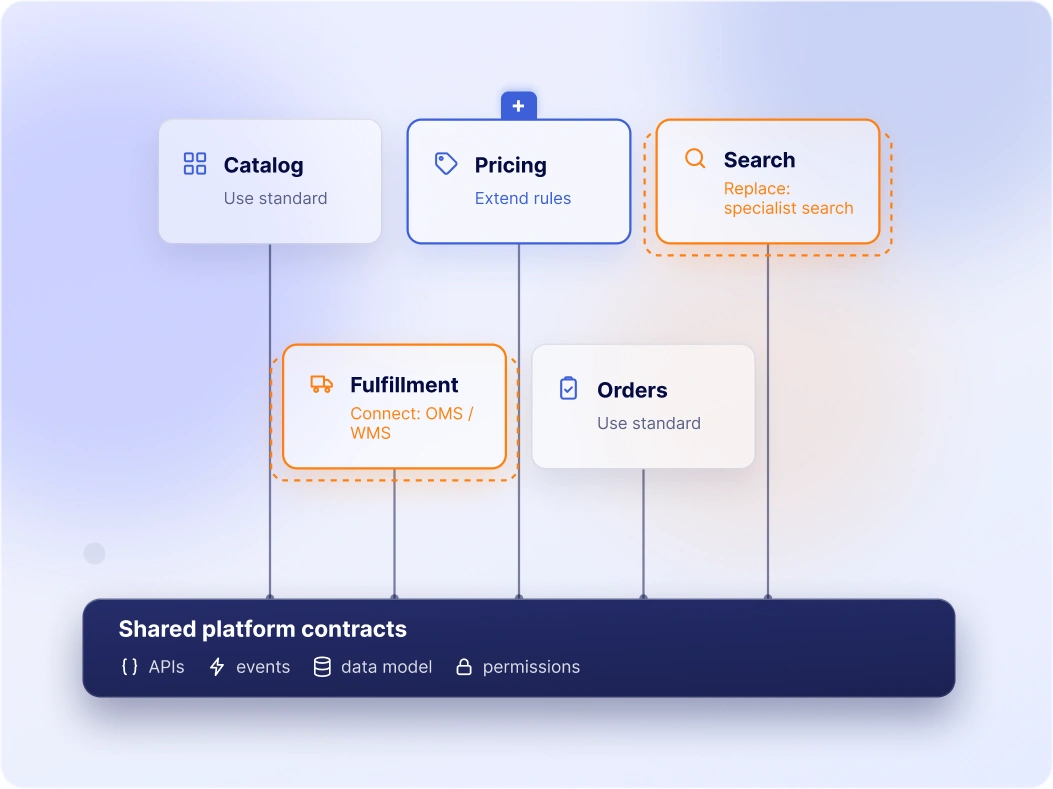
Modular commerce core
Extensible services, not a rigid suite. Replace or extend individual capabilities without rebuilding everything around them.
Middleware compatibility and eventing
Works inside existing orchestration environments—Azure, Boomi, MuleSoft, Kafka. Webhooks and event notifications support legacy systems and downstream coordination.
AI Capabilities Across the Entire Commerce Lifecycle
-
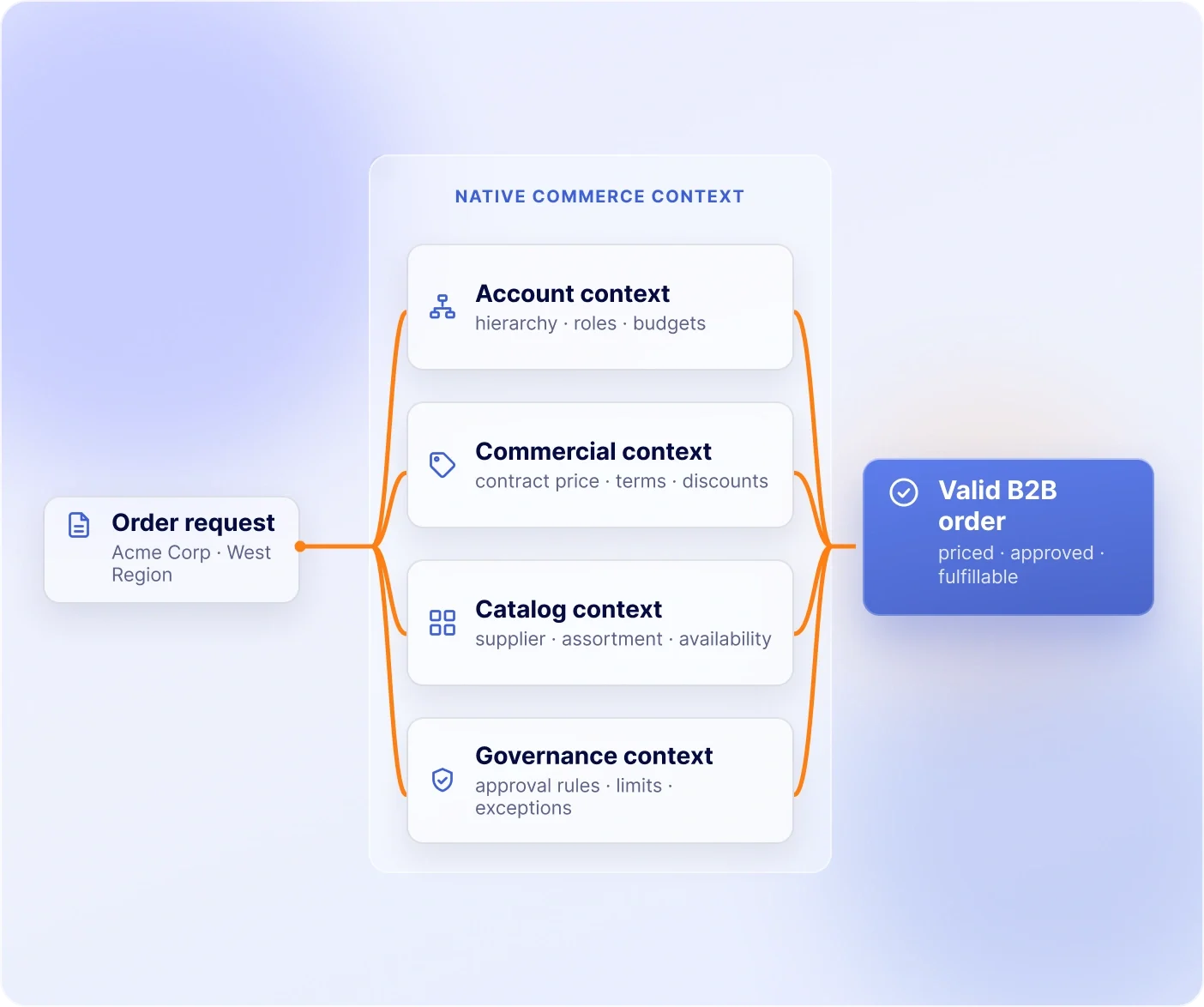
Virto Commerce treats contract pricing, account structures, supplier catalogs, and approval paths as native commerce context. These rules are evaluated inside catalog, cart, and order workflows, so complexity becomes part of the transaction rather than custom logic around it.
-
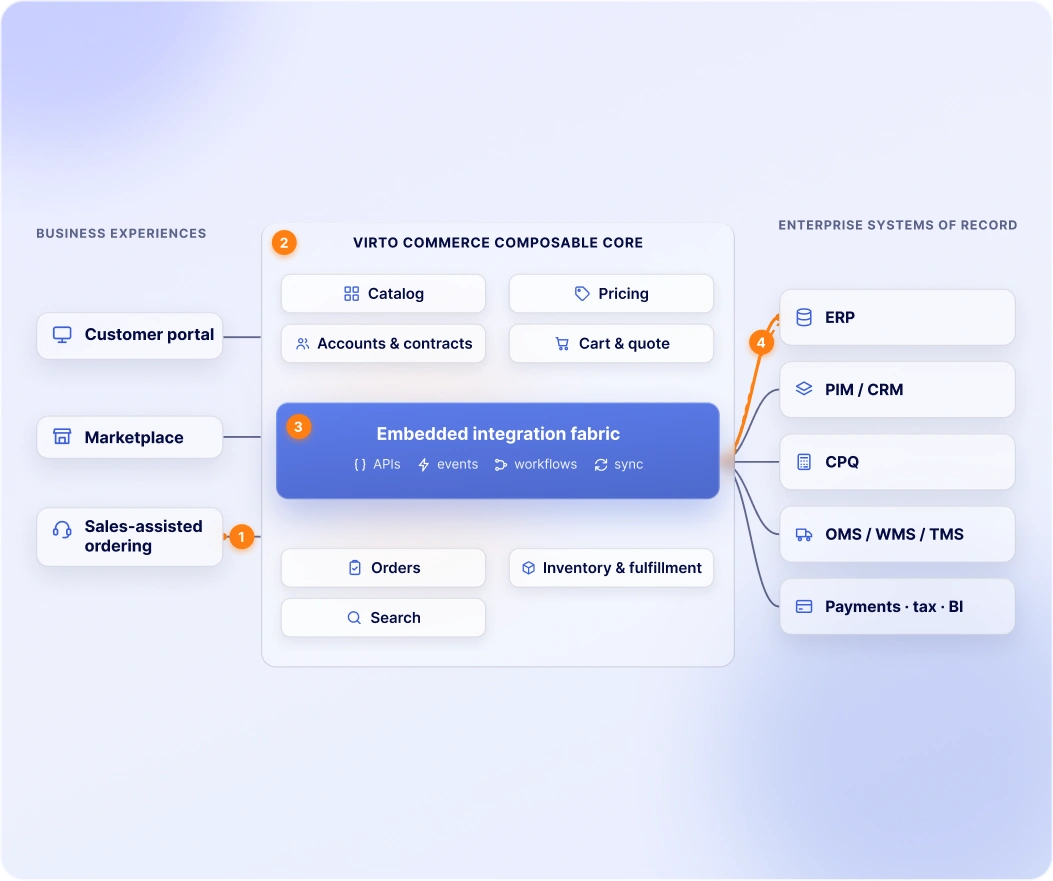
Virto integrations operate inside catalog, pricing, order, account, and fulfillment workflows, so enterprise systems stay synchronized at the business-process level.
-
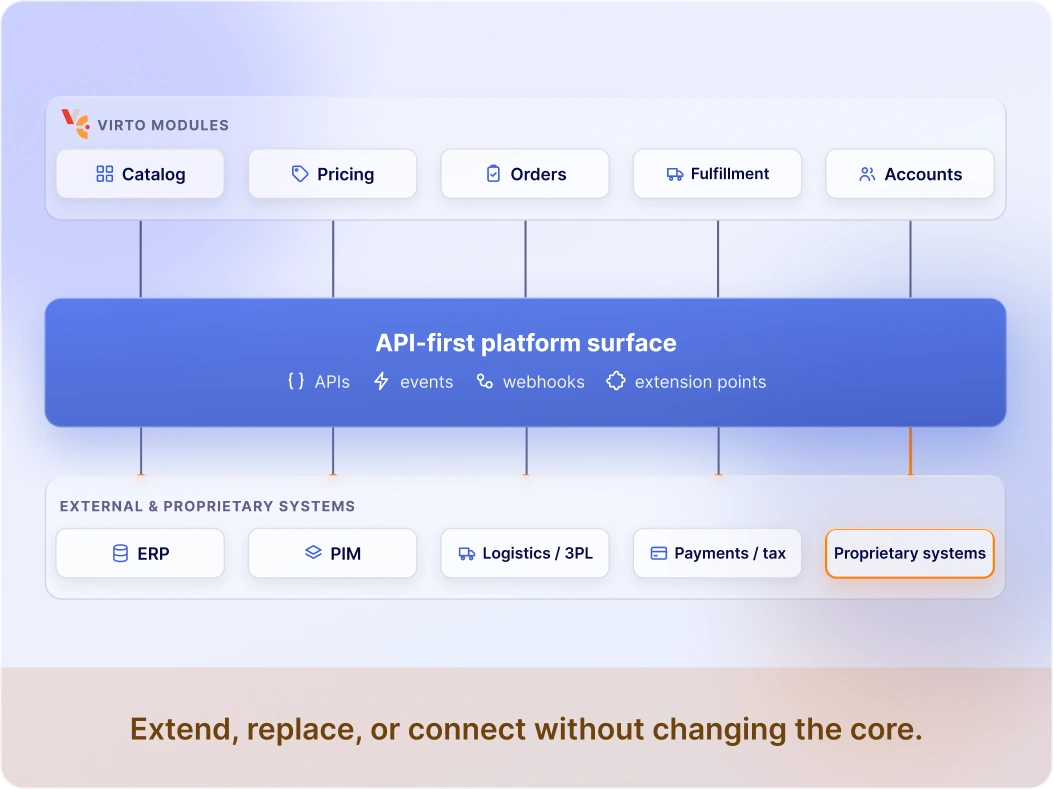
Virto Commerce exposes commerce capabilities through APIs, events, and extension points, so teams can connect enterprise systems, third-party services, and proprietary logic without rewriting the commerce core.
-
Use Virto capabilities where they fit. Extend specific modules for unique business rules, or replace them with specialist systems without forcing a full-platform rewrite.
Proven at Enterprise Scale

Global B2B commerce rolled out
across 25+ countries and 370K users
on a single adaptable foundation with
250+ integrated systems.

25M SKUs, 207 operational centers, and 200+ POS integrations—replatformed without rebuilding commerce infrastructure.

Headless B2B and B2C commerce across 30 countries, 4M+ products on one flexible architecture.
Ready to map your integration landscape?
Work with a solution partner to map your integration landscape and design the right architecture.