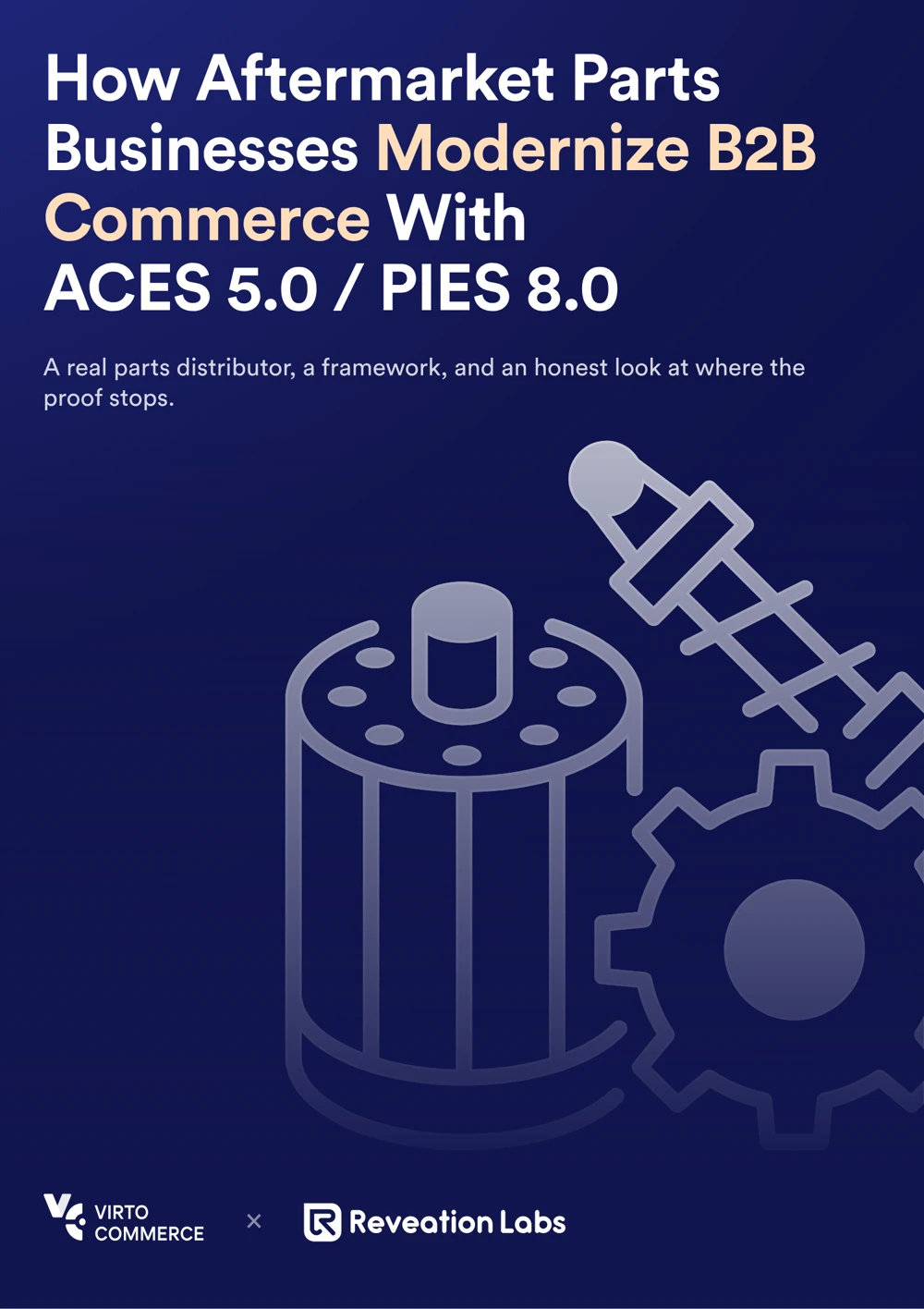
The new standards are here. Is your platform ready?
ACES 5.0 and PIES 8.0 were released in 2026, and the industry has already started to adopt them. This is the practical, no-pitch version: what actually changed in the standards, how real parts businesses rebuilt their B2B commerce around fitment, and a way to tell if you’re next.
The standard moved. Staying a version behind is the risk.
What’s inside the playbook
What actually changed in ACES 5.0 / PIES 8.0
A plain explainer, no pitch. What’s new, what it means whether you consume the data (distributor) or publish it (manufacturer), what breaks when the two sides fall out of sync, and what a migration actually looks like.
Real examples, stated honestly
How KW Parts runs fitment-driven B2B commerce across roughly 30 countries on a 4M+ part catalog, plus two more from the field: search across 8.6M SKUs, and the pricing-inventory-ERP stack behind a complex parts catalog. We say what each of the three proves, and where the evidence stops.
A framework to see if you’re next
The two buying situations, what turns a long-standing problem into a funded project, and a checklist you can run on your own operation. Plus an honest note on who doesn’t need any of this.
The accelerator, and a look inside it
A fitment-ready starting point for aftermarket B2B commerce from Virto Commerce and Reveation Labs. What’s handled up front, what’s configured per business, and why it’s a head start rather than a switch-on product, with a look inside the experience (vehicle selection, Best Fit / Possible Fit status, saved vehicles).
Discover More Valuable Resources